
Why workload isolation on AWS becomes a virtualization problem
The operational problem is not whether workloads can run in AWS; it is whether they can run close together without creating an unacceptable trust boundary. In many environments, the same account, VPC, host class, or even guest image family is used for applications with very different sensitivity levels. That is where virtualization design becomes a security control, not just an infrastructure choice.
If your objective is to reduce blast radius, prevent lateral movement, and constrain operator and tenant access, you need to decide which isolation boundary actually matters: guest-to-guest, guest-to-host, network segment, account boundary, or a combination of all four. After reading this article, you should be able to decide whether AWS virtualization is sufficient for your workload isolation goal, apply a practical validation workflow, and know what to verify before you let the design carry production traffic.
Key takeaways
- Secure isolation in AWS is not only about instance placement; it is about aligning virtualization boundaries with identity, networking, and management controls.
- Stronger isolation usually comes with trade-offs in cost, operational complexity, observability, and recovery flexibility.
- The right design depends on workload sensitivity, compliance requirements, shared responsibility assumptions, and how much trust you place in adjacent workloads and administrators.
- A virtualization design is only defensible if you can validate it under failure, maintenance, and access-review conditions, not just when it is freshly deployed.
What secure workload isolation means in AWS
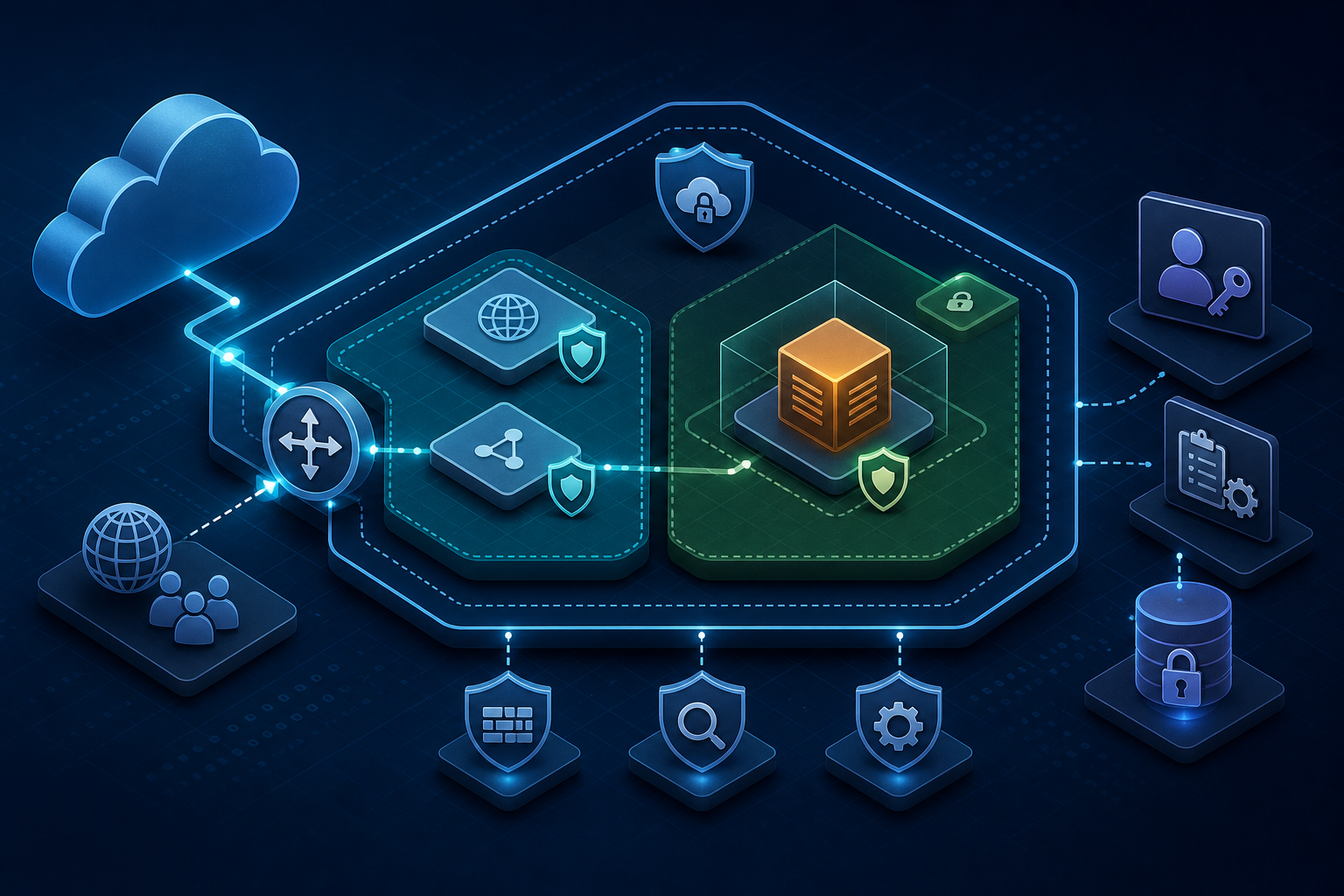
In practice, secure workload isolation means that one workload cannot meaningfully observe, influence, or compromise another workload without first crossing a boundary you explicitly accept. In AWS, that boundary may be enforced partly by the hypervisor, but it is rarely enforced by virtualization alone. Identity policy, security groups, routing, storage controls, key management, and instance metadata exposure all shape the actual blast radius.
This matters because many teams assume that separate instances automatically equal strong isolation. That assumption breaks down when workloads share credentials, reside in the same administrative domain, attach to the same network path, or use permissive automation. A compromised guest is only the beginning; the security question is whether the compromise can escape into neighboring systems or the control plane.
A useful way to think about AWS workload isolation is in layers:
- Execution isolation: the guest operating system and process boundary.
- Virtualization isolation: separation between guests and the underlying host layer.
- Network isolation: segmentation, routing control, and east-west restrictions.
- Administrative isolation: IAM, account boundaries, change ownership, and access reviews.
- Data isolation: separate keys, storage policies, and snapshot access controls.
When these layers are aligned, the design is resilient. When they are mismatched, the weakest layer becomes the practical boundary.
How AWS virtualization contributes to isolation
AWS virtualization contributes primarily by separating guest workloads from the physical host and from one another. The exact implementation details depend on the instance family and underlying platform, and those details can change over time, so the right question is not “is virtualization present?” but “what isolation properties are exposed to the workload, and what must I verify for my region and instance class?”
At a technical level, the architecture can improve isolation by limiting direct access to hardware, constraining guest visibility, and reducing shared-state exposure. For many workloads, that is enough when paired with strict account and network separation. For higher-risk workloads, though, the guest boundary alone may be too weak unless the surrounding environment is also hardened.
A practical example is a regulated service that processes customer identity data and also depends on internal batch jobs, observability agents, and third-party tooling. The primary risk is not just external attack; it is the possibility that a lower-trust internal workload shares enough path, privilege, or credential scope to access sensitive data. In that case, optimizing AWS virtualization means using the instance boundary as part of a broader segregation strategy, not as the only defense.
If you are considering stronger guest-host separation because the workload needs an additional confinement layer, it may help to compare that need with approaches such as Secure AWS Virtual Machine Isolation with Nested Virtualization. Nested virtualization is only appropriate in specific cases, but it illustrates an important point: deeper isolation layers only help when the guest, host, networking, and IAM boundaries are all validated together.
A practical workflow for deciding the right isolation boundary
A compact decision workflow helps prevent overbuilding one layer while leaving another weak. Use it as a validation lens rather than a rigid implementation plan.
Classify workload sensitivity
  -> identify trust dependencies and admin domains
  -> determine required isolation boundary
  -> choose AWS account / VPC / subnet / instance separation pattern
  -> harden guest, IAM, metadata, network, and storage controls
  -> validate failure, access, and recovery assumptions
  -> approve for production only if blast radius matches risk
The point of this workflow is to force a decision about trust. If the workload cannot tolerate a shared admin path, then shared credentials and shared systems management are already a problem, regardless of how carefully the instance itself is configured. If it cannot tolerate noisy neighbors or adjacent workload compromise, then the isolation model must account for where workloads live, how they are managed, and what they can reach.
Choosing the right isolation model
There is no single “most secure” AWS virtualization pattern. There is only the pattern that best matches the workload’s risk profile and operational constraints.
Use standard virtualized instances when the main risk is application compromise
For many enterprise workloads, conventional instance isolation is sufficient if the environment also uses separate accounts, least-privilege IAM, restrictive security groups, strong patching, and protected secrets management. This is usually the right choice when the business risk is moderate and the main concern is limiting the blast radius of a single application failure.
This model is efficient, familiar, and easier to automate. It is also the most common reason teams can scale while still maintaining reasonable isolation. The downside is that it relies heavily on disciplined operations; one permissive role or overly broad network path can undo much of the benefit.
Use dedicated segmentation when workload trust differs materially
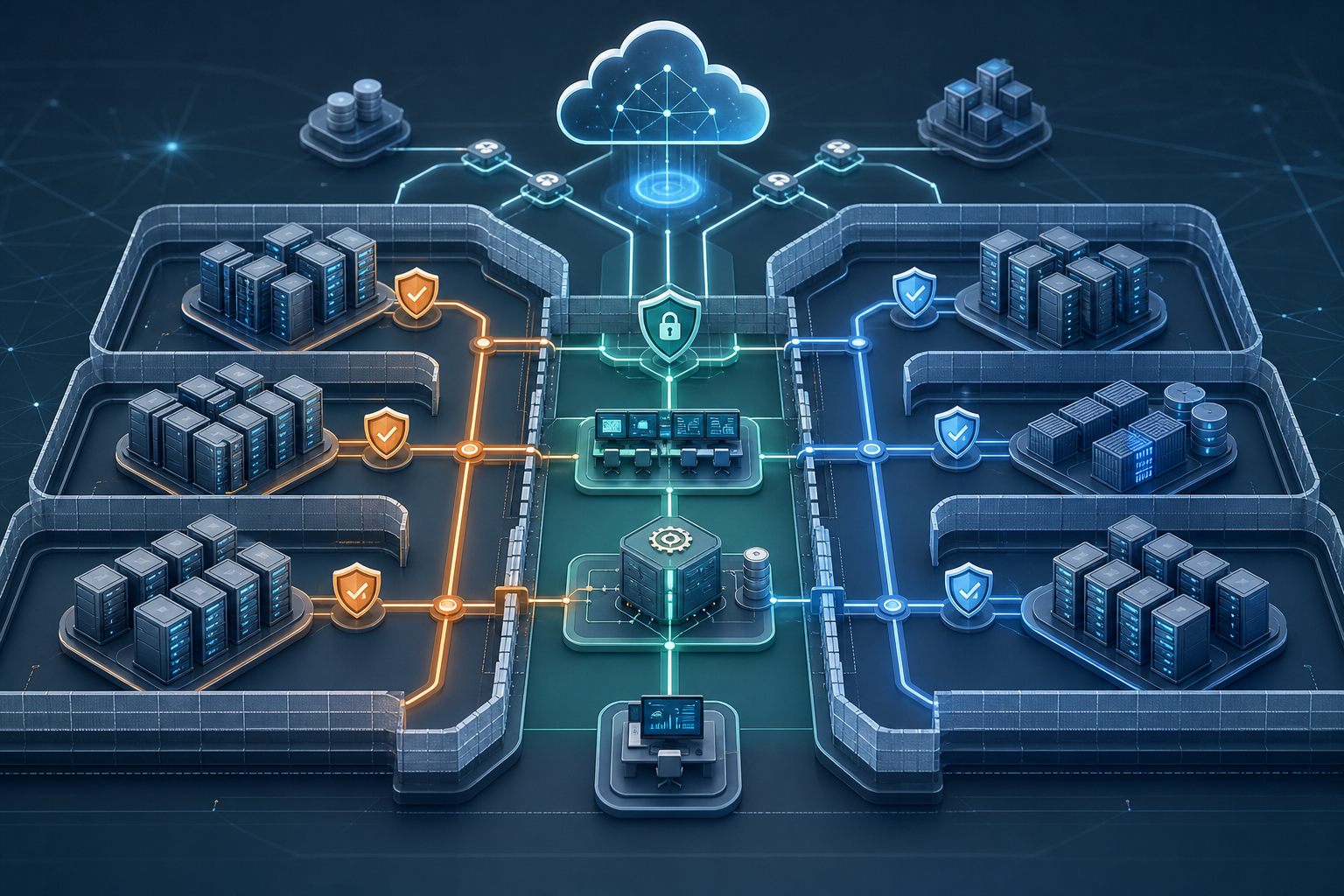
If workloads have different owners, data classifications, or operational lifecycles, isolate them with separate accounts, distinct VPC boundaries, and separate management scopes. The virtualization layer then supports the design rather than defining it. This is usually the correct answer when one workload is internet-facing and another is sensitive, or when development and production share infrastructure patterns but not risk tolerance.
Consider stronger confinement for high-assurance or untrusted-code scenarios
If you are hosting untrusted code, highly sensitive secrets, or workloads with strict tenant separation requirements, the decision may require a stronger confinement model than ordinary shared-instance placement. In those environments, instance choice, guest hardening, and control-plane isolation matter more than convenience. The cost is usually higher operational overhead, more constrained observability, and potentially more complicated recovery paths.
If your organization already uses hypervisor hardening patterns in other environments, a reference like the VMware vSphere Hardening Guide for Secure Virtualization can be useful as a mindset comparison. The platform is different, but the principle is the same: reduce attack surface, limit privilege, and validate configuration drift before it becomes a breach.
What this means in practice
A secure AWS virtualization strategy should not be evaluated only at deployment time. It should be evaluated against how the environment behaves when something goes wrong.
Consider a payment-processing team running a primary API tier, a background reconciliation service, and a shared observability stack in the same cloud footprint. On paper, the instances are separated and the subnets are segmented. In practice, the observability agents can read too much, the maintenance role can touch too many nodes, and snapshot permissions can expose data to a broad operational group. That environment is not isolated simply because workloads run on separate virtual machines.
What this means in practice is that the right design usually combines:
- separate accounts or administrative domains for materially different trust levels;
- restrictive east-west network policy between workloads;
- locked-down instance metadata and credential delivery;
- separate key material and storage policies for sensitive data;
- controlled access to images, snapshots, and backups;
- workload-specific logging and alerting paths that do not require broad read access.
The virtualization layer helps only if the surrounding controls make the guest boundary meaningful. Otherwise, the strongest technical isolation is undercut by shared operational access.
Implementation trade-offs you should expect
The more secure the isolation requirement, the more you usually pay in operational friction.
A stronger model often increases the number of accounts, networks, policies, and deployment pipelines that must be managed consistently. It can also complicate patching, autoscaling, blue-green deployment, and incident response. In some cases, the biggest cost is not compute; it is the additional governance needed to prove that the design still matches the intended trust model.
There is also a observability trade-off. Security teams often want more telemetry, but the collection path itself can become an over-privileged channel. Similarly, backup and restore workflows may become more fragile when encryption keys, snapshot permissions, and image custody are tightly partitioned.
The practical rule is straightforward: if the workload data or tenant risk justifies stronger isolation, accept the added operational burden and engineer the controls explicitly. If the risk does not justify that burden, prefer a simpler design that you can actually operate well. Weakly operated “high-security” infrastructure is usually less safe than well-operated moderate isolation.
Common mistakes that weaken AWS workload isolation
One of the most common mistakes is treating instance separation as the same thing as trust separation. Separate virtual machines do not automatically solve credential reuse, shared administrative access, or overly broad network reach.
Another common mistake is centralizing too much power in automation. A deployment pipeline with authority over every subnet, key, and snapshot can become the highest-value target in the environment. If that pipeline is compromised, your virtualization boundary will not save you.
Teams also frequently overlook metadata and credential exposure. If applications or sidecars can retrieve credentials they do not need, the effective boundary is already broken. Likewise, if logs, metrics, or backups are accessible to a wider set of operators than the source workload, the isolation model is weaker than it appears.
Finally, many teams fail to validate recovery paths. A design that looks secure in steady state may collapse during incident response because a break-glass role, temporary security group rule, or restore procedure grants wider access than intended.
Decision guidance: when this approach is appropriate
Use AWS virtualization as part of your isolation strategy when the following are true:
- the primary concern is reducing blast radius between workloads, not eliminating all shared infrastructure risk;
- you can separate sensitive workloads by account, network, and IAM scope;
- you can restrict image, snapshot, and backup access tightly;
- you can accept the maintenance and governance overhead of stronger segmentation;
- your team can validate the design under operational stress, not just in a lab.
Do not rely on virtualization alone when your core requirement is hard tenant isolation, strict regulatory segregation, or protection against any shared administrative domain. In that case, the question is not whether virtualization exists, but whether the boundary you are planning to depend on is strong enough for the risk.
Production readiness checklist
Before approving the environment for production use, verify the following evidence:
- Workload sensitivity and trust assumptions are documented.
- Accounts, roles, and administrative responsibilities are separated for different risk tiers.
- Network paths between workloads are explicitly allowed, not implicitly open.
- Instance metadata and credential access are restricted to the minimum required scope.
- Encryption keys, snapshots, and backup permissions are limited to approved operators.
- Logging and monitoring access do not expose sensitive payloads unnecessarily.
- Patch, image, and configuration baselines are defined and reviewed.
- Restore, failover, and break-glass procedures preserve the intended isolation boundary.
- Exception handling is tracked, time-bound, and reviewed for drift.
- The team can explain why this boundary is sufficient for the workload’s risk profile.
Final takeaway
Optimizing AWS virtualization for secure workload isolation is less about finding a single perfect instance type and more about building a boundary you can defend operationally. The most secure design is the one where virtualization, IAM, network controls, data protection, and administrative separation all agree on the same trust model. If they do not, the boundary is only cosmetic.
Use this guidance together with ESXi ransomware hardening to connect the workflow with related operational context already available on the site.