Key takeaways
- Rootless mode removes the need for a container process to run with host-root privileges, which reduces the impact of a container escape or misconfiguration.
- Seccomp narrows the Linux system call surface available to a container, limiting what a process can ask the kernel to do.
- The two controls are complementary: rootless mode changes privilege boundaries, while seccomp constrains kernel interaction.
- They are not drop-in replacements for image hardening, least privilege, or runtime isolation; they work best as part of broader Docker Container Hardening: Best Practices for Secure Images and How to Secure Docker Containers with Least Privilege Access.
- Before production use, validate storage drivers, networking, cgroup behavior, capabilities, and any application syscalls blocked by seccomp.
Why this matters operationally
The practical problem behind container hardening is simple: a container may look isolated, but the runtime still depends on a host kernel, a daemon, and configuration choices that can widen blast radius. If a workload is compromised, the question is not whether it was "inside a container"; it is whether the attacker gained access to host-level capabilities, sensitive kernel interfaces, or paths that were assumed to be safe.
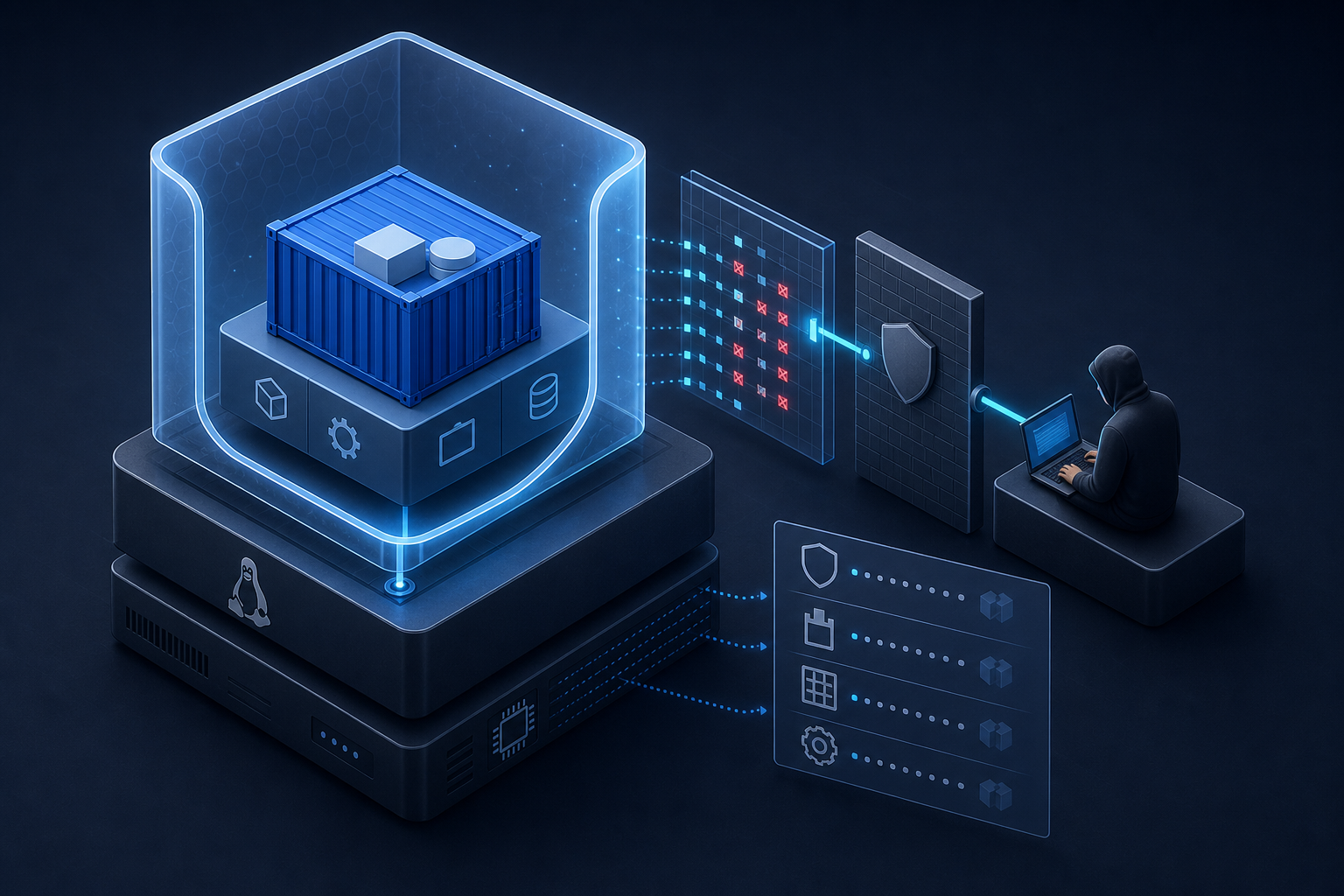
Rootless mode and seccomp are useful because they reduce risk in different ways. Rootless mode prevents the container engine and its child processes from running as host root, which lowers the consequences of daemon compromise and limits what a user can do on the host. Seccomp, meanwhile, acts as a syscall filter so that a container process can only request the kernel operations it actually needs. That matters in production when you are operating shared hosts, multi-tenant clusters, CI runners, or development environments that execute untrusted builds.
After reading this article, you should be able to decide whether rootless mode and seccomp fit your workload, understand the operational trade-offs, apply a compact validation workflow, and verify the controls before you promote them to production.
What rootless mode actually changes
Rootless mode changes the user context under which the container engine runs. Instead of requiring the engine to manage containers as host-root, it uses an unprivileged user on the host and user namespaces to map container root to non-root credentials outside the container. The effect is not that the container becomes harmless; it is that the host-level authority behind the container is much smaller.
That distinction matters. A process running as root inside the container is not the same as a process running as root on the host. Rootless mode narrows the second case. If an attacker breaks out of the container or exploits the runtime, they are less likely to inherit direct host-root capabilities. This is a meaningful reduction in impact, especially on build agents, ephemeral test systems, and developer laptops where full daemon privileges are often granted for convenience.
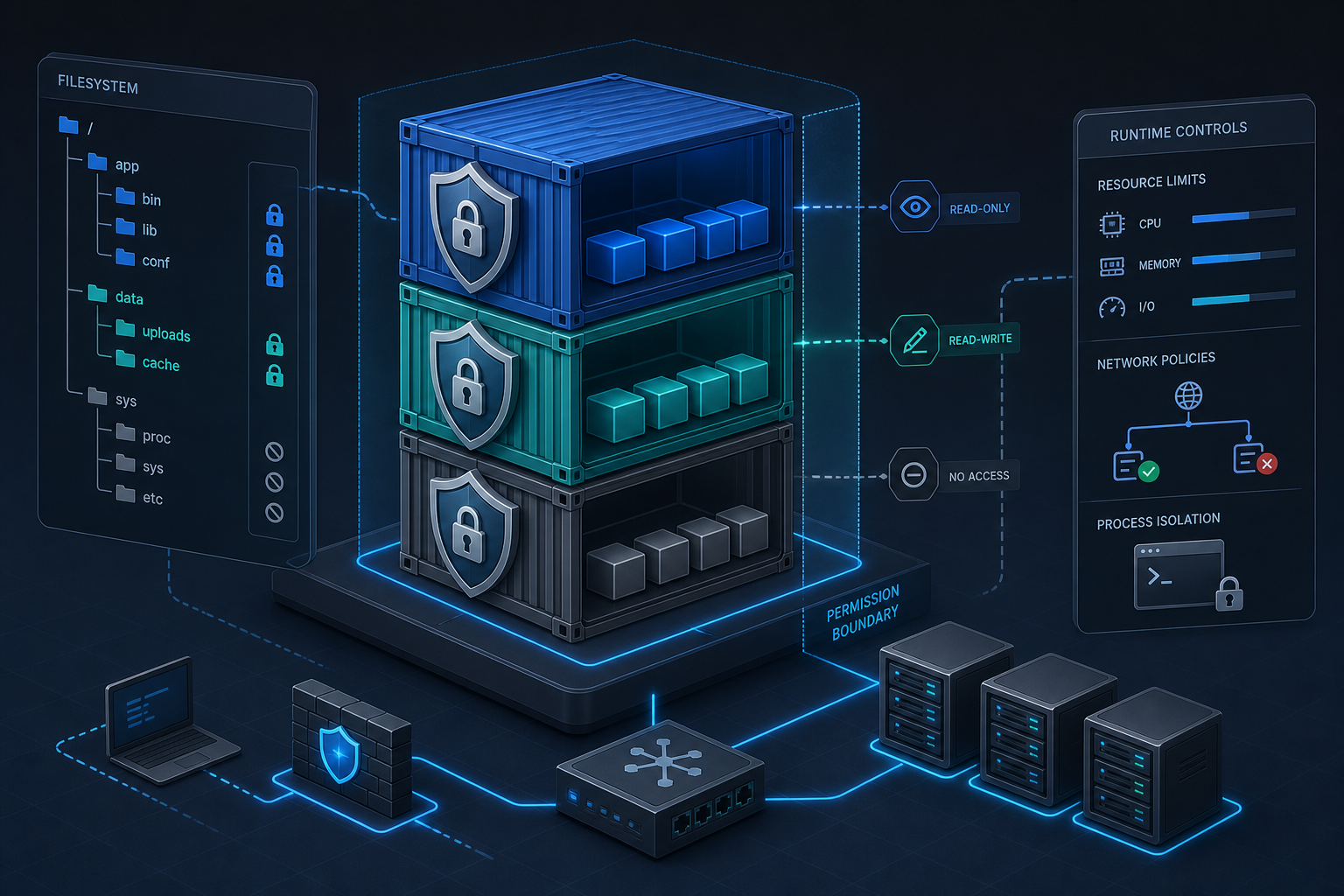
Rootless mode is not universal. Some workloads depend on privileged networking, low ports, direct device access, or kernel features that are harder to expose in an unprivileged context. Rootless mode also changes operational assumptions around storage and networking, so it should be evaluated as an architectural choice rather than a simple security toggle.
What seccomp actually blocks
Seccomp is a kernel feature that filters system calls. In container hardening, a seccomp profile defines which syscalls are allowed, denied, or conditionally permitted. The goal is to remove unnecessary kernel attack surface from the application runtime.
This matters because many containers only need a modest subset of syscalls. If a service never needs to manage hardware, mount filesystems, or inspect process namespaces beyond what the runtime already provides, there is no reason to keep those operations available. A more restrictive syscall profile can reduce the chance that a vulnerable application or exploited dependency can pivot into kernel paths it should never touch.
The main operational challenge is compatibility. Blocking a syscall that an application uses can cause failures that look like strange runtime bugs: startup errors, missing features, or abrupt exits when the process tries to invoke a denied call. In practice, seccomp is most reliable when you begin with a known-good baseline profile, observe real workload behavior, and adjust only when there is a clear need.
How the two controls work together
Rootless mode and seccomp solve different problems, so neither should be treated as redundant. Rootless mode reduces privilege at the host boundary. Seccomp reduces the syscall surface available to the process once it is running. If one control is weakened, the other still provides value.
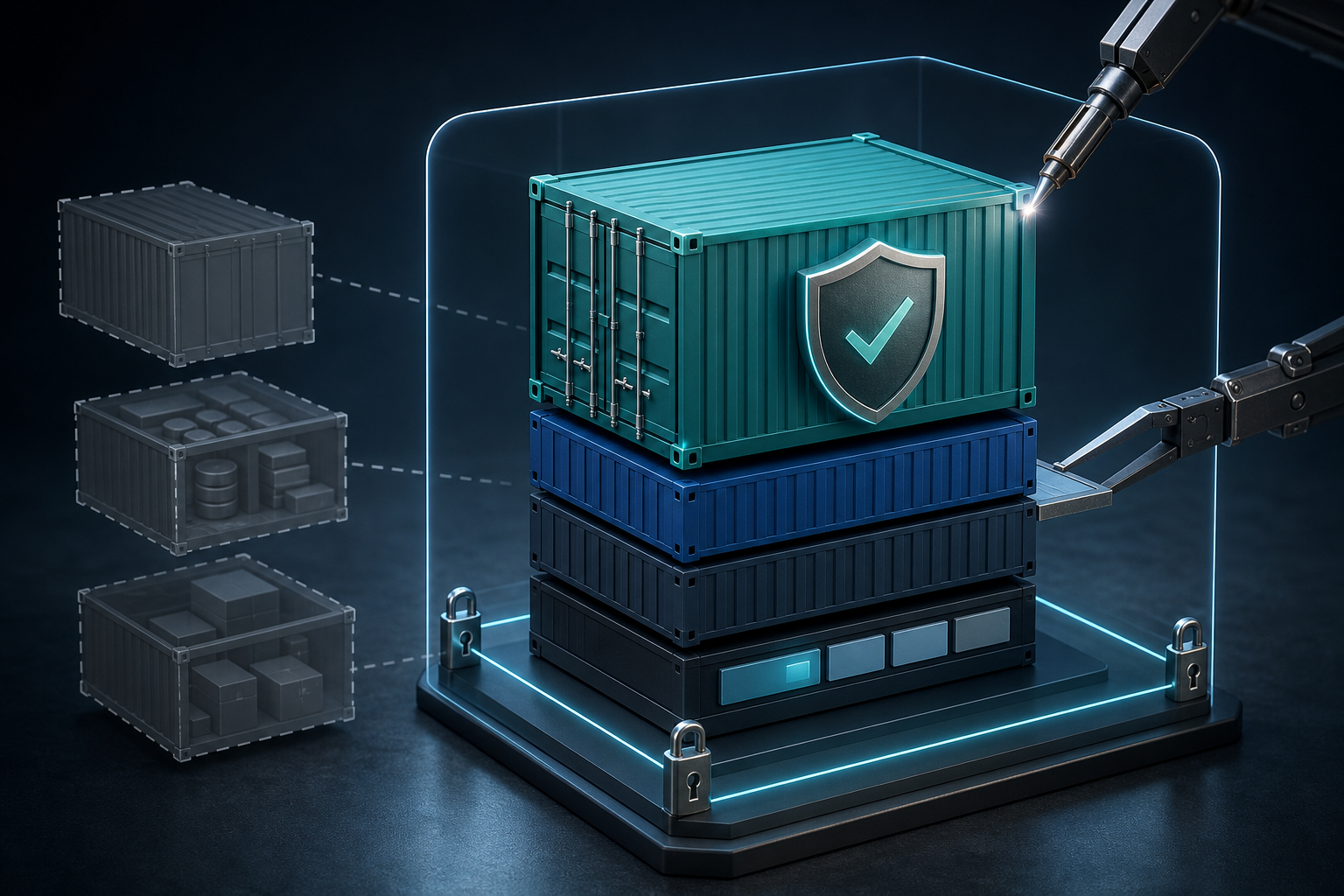
This layered approach is especially relevant for environments that already aim to reduce container permissions through image minimization and runtime defaults. If you are already hardening images and removing unnecessary capabilities, seccomp and rootless mode extend that discipline into the execution layer. In other words, image hardening reduces what is shipped, least privilege reduces what is granted, and runtime controls reduce what the process can do after launch.
A useful mental model is this: rootless mode protects the host from the container engine's privilege boundary, while seccomp protects the kernel from unneeded requests from the container process. Together, they make both compromise paths narrower.
Compact workflow for evaluating and enabling the controls
1. Classify the workload: does it need privileged ports, device access, or custom kernel interaction?
2. Confirm host prerequisites: user namespaces, storage driver compatibility, and networking support.
3. Start with a baseline seccomp profile and observe the application in a non-production environment.
4. Record denied syscalls, then decide whether to update the application, the profile, or the deployment model.
5. Verify the container still meets service checks, startup time targets, logging, and health probes.
6. Promote only after confirming rollback options and documenting the approved profile and runtime mode.
This workflow is intentionally compact because the key decision is not just "can it run?" but "can it run safely without hidden operational debt?" If a workload requires repeated profile exceptions or fails in ways that are difficult to diagnose, the control may still be technically sound but operationally inappropriate for that service.
Practical scenario: a CI runner or build host with mixed workloads
Consider a CI system that runs short-lived container jobs for multiple repositories. Some jobs build application images, some run unit tests, and others invoke infrastructure tooling. The environment is attractive to attackers because it executes code from many sources and often has more runtime permissions than production containers.
In this setting, rootless mode is appealing because it reduces the impact of a compromised job on the host itself. A malicious build script should not inherit host-root just because the runtime started the container. Seccomp is useful because build or test containers may not need the full set of kernel interfaces available by default. If a job only compiles software and runs tests, there may be a strong case for blocking unusual syscalls that are not required by the toolchain.
The trade-off is that build environments are often noisy and diverse. One repository may work cleanly under a restrictive profile, while another needs additional syscalls because of its language runtime, packaging tooling, or test harness. That does not make the hardening wrong; it means you need workload classification. In practice, the safest pattern is to treat baseline CI images as candidates for rootless execution and seccomp enforcement, then maintain documented exceptions for the few jobs that genuinely need broader access.
What this means in practice
The most practical way to think about rootless mode and seccomp is to separate their operational questions.
Rootless mode answers: "Do I need the container engine to have host-root authority for this workload?" If the answer is no, rootless is often a strong default for developer systems, test runners, and other environments where privileged host access is not necessary.
Seccomp answers: "Which kernel operations does this workload truly need?" If the answer can be expressed as a limited syscall set, seccomp becomes a useful enforcement layer. If the workload is highly dynamic or depends on unusual runtime features, the profile may need careful tuning or may be a poor fit.
For production decision-making, this means you should not ask whether the controls are generally good. You should ask whether the workload's operational profile supports them with acceptable support cost. That is the difference between a secure pilot and a stable rollout.
If you are still reducing ambient container risk more broadly, pair these controls with image minimization and privilege reduction. The hardening sequence is usually more effective when the image is already slim and the runtime does not have unnecessary rights before seccomp is even applied.
Implementation trade-offs you should expect
The first trade-off is compatibility. Rootless mode can affect network behavior, port binding, filesystem ownership, and storage performance depending on the host setup and storage driver. Seccomp can deny syscalls that are technically unusual but still required by a runtime, language toolchain, or monitoring agent.
The second trade-off is observability and debugging. When a container is denied a syscall, the failure may not explain itself clearly at the application level. You may need host logs, runtime diagnostics, or short-lived test deployments to identify the exact denial. Rootless mode can similarly change the shape of logs and host-level troubleshooting because the engine runs under a user context rather than as a privileged service.
The third trade-off is operational ownership. A custom seccomp profile is a security control, but it is also configuration that must be maintained, reviewed, and rolled forward with application changes. A security policy that is not versioned with the workload tends to drift, and drift creates either breakage or silent exceptions.
The fourth trade-off is scope. These controls do not remove the need for careful image selection, secret handling, capability trimming, or service isolation. They reduce risk, but they do not eliminate it. That is why they fit best into a layered model rather than a single-control strategy.
Decision guidance: when this approach fits
Use rootless mode when the workload does not need host-root privileges and you want a cleaner host boundary. It is especially compelling for developer machines, shared build systems, and ephemeral environments that process untrusted code.
Use seccomp when the application has a predictable syscall footprint and you can validate that a restrictive profile does not interfere with normal behavior. Stateless services, simple workers, and tightly controlled internal apps are often better candidates than highly heterogeneous platform services.
Use both together when your primary concern is reducing blast radius on shared infrastructure, and when you can afford the validation work needed to confirm compatibility.
Be cautious when the workload requires privileged networking, direct device exposure, specialized storage behavior, or extensive kernel interaction. In those cases, the controls may still be usable, but the approval should be based on evidence, not assumptions. If the exception list grows larger than the policy, the simpler operational choice may be to narrow the deployment model rather than force a generic profile.
Common mistakes that weaken the result
A common mistake is assuming rootless mode makes a container safe by itself. It does not. A rootless container can still exfiltrate data, attack adjacent services, or abuse whatever network and filesystem access it legitimately has.
Another mistake is applying a seccomp profile without understanding the workload's actual behavior. If you block syscalls blindly, the result may be intermittent failures that are difficult to diagnose. If you allow too much because of one unusual dependency, you may end up with a profile that offers little real reduction.
A third mistake is treating custom profiles as one-time tasks. Application versions change, language runtimes change, and build tools change. The profile must be revisited when the workload changes, otherwise the control becomes either brittle or overly permissive.
A final mistake is ignoring validation outside the application itself. You need to verify health checks, startup paths, logs, file permissions, networking, and rollback behavior, not just whether the container "starts." Security controls that pass only a superficial test are likely to cause trouble during deployment.
Production readiness checklist
Before approving rootless mode and seccomp for a production workload, verify the following:
- The workload's privilege needs are documented, including any low-port, device, or namespace requirements.
- Host support for rootless execution is confirmed for the target environment.
- Storage, networking, and cgroup behavior are acceptable under the chosen runtime mode.
- A baseline seccomp profile is in place and tested against the actual application build.
- Any denied syscalls have been reviewed and explained, not just whitelisted to make errors disappear.
- Health checks, logging, metrics, and rollback procedures still work under the hardened configuration.
- The final policy is versioned and owned alongside the application or platform configuration.
Final takeaway
Hardening Docker containers with rootless mode and seccomp is effective when you treat it as a compatibility-checked reduction in privilege and syscall surface, not as a universal preset. Rootless mode helps keep host authority out of the container path; seccomp helps keep unnecessary kernel requests out of the runtime path. If your workload can run cleanly with both, you gain a meaningful security improvement with limited operational complexity. If it cannot, the failure mode is informative: it tells you where the workload depends on assumptions that should be documented, constrained, or redesigned before production use.
Use this guidance together with Citrix HDX optimization to connect the workflow with related operational context already available on the site.