
Key takeaways
Fine-tuning an LLM for secure code review automation can reduce analyst load, but it does not replace deterministic security checks or human review. The useful pattern is usually narrow: classify findings, prioritize risky changes, suggest review comments, and normalize security policy enforcement across repetitive code patterns.
The main operational question is whether your team can turn a review model into a controlled decision-support layer without increasing false negatives, policy drift, or prompt exposure. If you can define the review scope, train on trustworthy examples, validate outputs against a fixed policy, and keep the model off direct merge authority, the approach can be practical.
A secure implementation depends less on model size and more on controls around data quality, evaluation, isolation, and monitoring. In practice, that means building the model into a pipeline that is validated like any other production artifact, as discussed in Building Secure ML Pipelines with Model Validation Checks.
Why this matters operationally
Code review teams often face the same security problem in a different form: too many diffs, too many repetitive patterns, and too little time to inspect every risky change deeply. A fine-tuned LLM can help scale the first pass of review by identifying known insecure patterns, mapping them to policy, and drafting reviewer guidance. That matters when security engineers are expected to keep pace with delivery without turning every review into a manual triage exercise.
The risk is that an LLM also introduces a new control surface. A model can miss a finding because the training data was incomplete, overfit to one language or framework, or learn the wrong policy precedence from noisy labels. It can also produce confident but unsupported review comments. If you let the model act as an authoritative gate, those failures become production risk. If you use it as a bounded assistant with strong validation, it can improve throughput without weakening the review process.
That distinction is the reason to treat secure code review automation as a control-design problem, not just a machine learning problem. You are not asking, “Can the model understand code?” You are asking, “Can we constrain the model so it reliably supports the review workflow under our security policy?”
When fine-tuning is a good fit
Fine-tuning is most useful when the review task is repetitive, policy-driven, and grounded in examples that your organization already labels consistently. Common fits include detecting insecure configuration patterns, prioritizing files that touch authentication or cryptography, classifying review comments into security categories, or recommending whether a change should be escalated.
It is a weaker fit when the task depends on open-ended reasoning across large codebases, dynamic runtime context, or constantly changing threat models. For example, if your main need is to discover novel exploit chains, a fine-tuned classifier will usually be less useful than static analysis, dependency scanning, or a targeted rule engine. Similarly, if your policy changes weekly, the model will drift faster than you can retrain it unless the workflow separates policy logic from learned behavior.
A good decision rule is simple: fine-tune when the outcome can be judged against stable review labels, and do not fine-tune when the task requires the model to invent security judgment from sparse evidence. If you need deterministic compliance gates, keep those in code or policy-as-code and use the LLM only to augment reviewer productivity.
How the workflow works
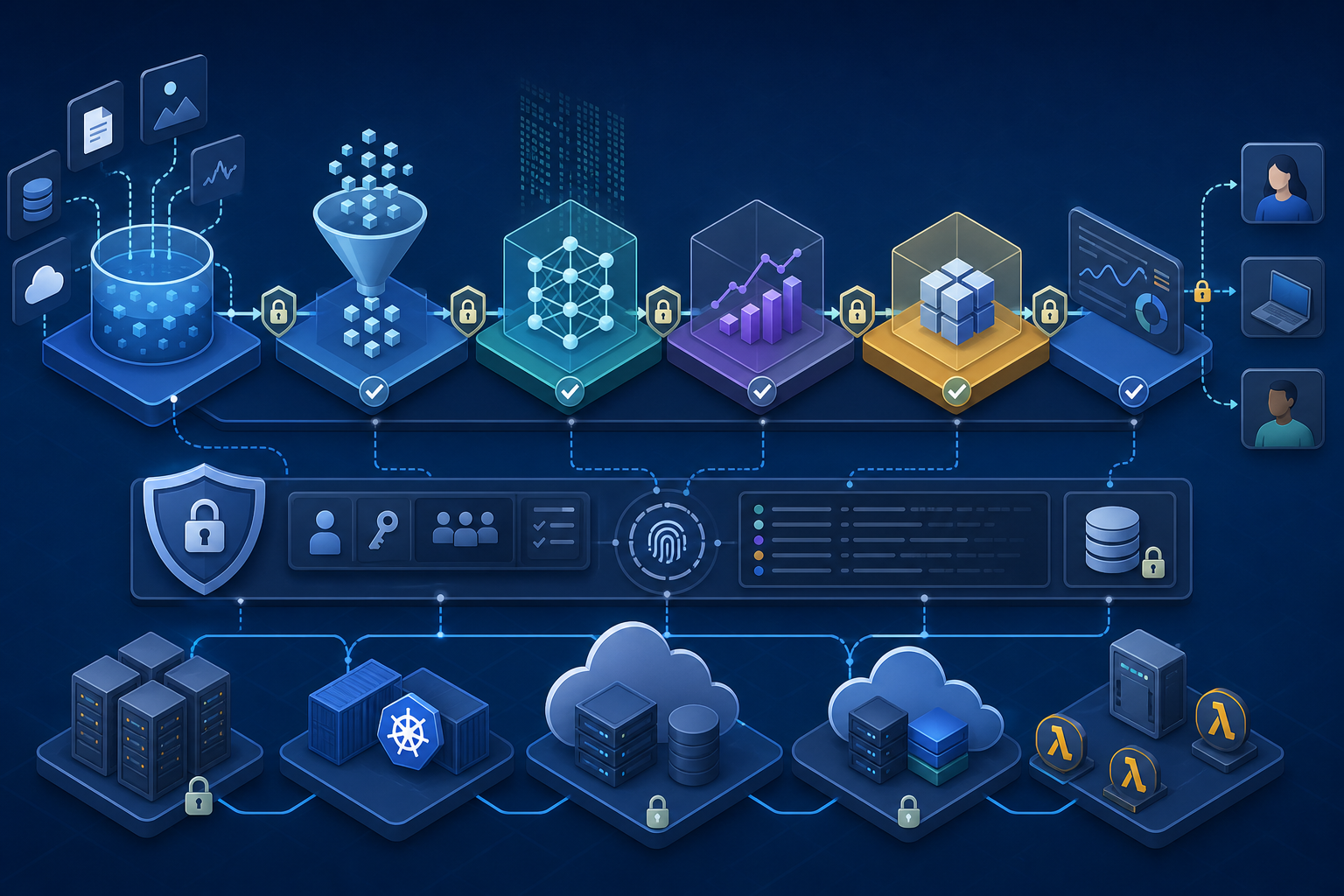
The safest workflow is a layered system. The model should consume bounded inputs, produce structured outputs, and hand those outputs to deterministic checks before anything reaches a reviewer or merge decision.
1. Collect approved historical review examples
2. Normalize labels and redact secrets
3. Fine-tune the model on narrowly defined review tasks
4. Evaluate against a frozen test set and policy rules
5. Run the model only on scoped diffs or selected files
6. Post-process output with schema validation and allowlists
7. Route high-risk findings to human review
8. Monitor false negatives, drift, and policy exceptions
In practice, the model should not “review code” in a general sense. It should produce one of a small number of supported outputs, such as:
- security risk category
- severity estimate with rationale
- whether the change matches a known risky pattern
- whether the finding should be escalated to a specialist
- a structured comment for the reviewer to verify
That structure matters because it makes evaluation possible. If the output is free-form prose, you cannot reliably measure whether the model is obeying policy. If the output is structured JSON or a constrained template, you can validate it, compare it to ground truth, and reject malformed responses before they create workflow noise.
A practical scenario you may recognize
Consider a platform team that reviews pull requests across a large microservices estate. Most PRs are routine, but some touch authentication, secrets handling, input validation, or authorization boundaries. The security team already has review guidance, but reviewers apply it unevenly and often focus on obvious issues while missing policy-specific details.
In that environment, a fine-tuned LLM can be trained to recognize the organization’s own review language: which patterns merit escalation, which comments are considered blocking, and which findings require evidence from tests or configuration. The model is not deciding whether code is safe. It is helping reviewers identify changes that deserve closer inspection, especially in repetitive areas where humans tend to skim.
This is also where How to Build and Secure a Machine Learning Model Pipeline becomes relevant: the model is only one part of a broader chain that includes reproducibility, approval, and operational controls. If the training set changes silently or the deployment path bypasses validation, the model can become a hidden policy engine with no audit trail.
What the model should and should not do
A secure review assistant needs a tight scope. The model should summarize, classify, and prioritize; it should not approve merges, create exceptions, or infer runtime behavior that is not present in the diff and associated context.
A good boundary is to let the model answer questions like:
- Does this diff introduce a security-sensitive control path?
- Is this change similar to previously blocked patterns?
- Does the code touch secrets, auth, crypto, or deserialization logic?
- Does the reviewer need more context before approving?
A poor boundary is to ask it to determine whether a change is “secure enough” on its own. That pushes policy judgment into a probabilistic system that may be wrong for reasons that are hard to detect. If you need an approval decision, build that decision from explicit rules, evidence checks, and human sign-off.
This separation also helps with adversarial resilience. Reviewers are not the only users of code-generation systems; attackers can also attempt to shape inputs so a model misses a problem or downgrades severity. If you want a deeper view of that threat model, How to Secure Machine Learning Models Against Adversarial Attacks is a useful complement because the same manipulation concerns apply when the model is embedded in review workflows.
Implementation trade-offs
The biggest trade-off is between flexibility and controllability. Fine-tuning can improve consistency on your organization’s own policy language, but it also introduces maintenance overhead. You will need labeled examples, periodic retraining, version control for datasets and prompts, and a way to compare model versions against the same frozen benchmark.
Another trade-off is recall versus precision. Security teams usually care more about avoiding false negatives than about reducing noise, but excessive false positives will make reviewers ignore the model. The right balance depends on where you place the model in the workflow. If it only triages for escalation, higher recall may be acceptable. If it generates blocking comments, precision matters more.
Latency and cost also matter. A fine-tuned model may be fast enough for PR-time feedback, but only if the input is constrained. Sending full repositories, large dependency graphs, or broad conversational context can make the system slower, more expensive, and harder to reason about. For secure review use cases, smaller scoped inputs are usually better than richer but unbounded context.
There is also an important governance trade-off: every model version should be treated as a controlled release artifact. That means versioning the training data, documenting the target task, capturing evaluation results, and requiring approval for promotion. If your organization already uses model approval checks, align this workflow with them; if not, use the same rigor you would apply to a policy engine or static analysis rule set.
What this means in practice
In practice, successful teams use fine-tuned LLMs as review accelerators, not as security authorities. The model helps narrow attention to diffs that are likely to matter, while deterministic scanners and human reviewers still own the final judgment.
That means the operational design usually looks like this:
- deterministic controls scan the code first
- the LLM summarizes or classifies only the relevant slice
- outputs are constrained to a known schema
- high-confidence or high-risk cases are escalated automatically
- a human validates anything that changes approval status
This workflow works best when the model’s output can be audited later. Security teams frequently need to explain why a finding was ignored, downgraded, or escalated. Structured outputs, stored prompts, and versioned model metadata make that review possible.
It also changes how you handle policy updates. If your review standard changes, update the policy definition first, then retrain or re-label examples to match the new standard. Do not assume the model will absorb policy drift automatically; it will usually preserve old habits unless the training signal changes clearly.
Decision guidance: should you fine-tune or not?
A fine-tuned model is worth considering when all of the following are true:
- your review task is repetitive and labelable
- you have enough trusted historical review data
- the policy is stable enough to encode consistently
- the model will assist reviewers rather than replace them
- you can measure false negatives and review escalation quality
You should prefer simpler alternatives when any of these are true:
- the task is mostly deterministic and rule-based
- the model would need broad repository context to be useful
- labels are inconsistent across teams or projects
- you cannot support dataset governance or model versioning
- the approval path depends on the model making the final call
A useful rule of thumb is that if you cannot write down the expected output format and acceptance criteria in one page, the use case is probably too broad for secure fine-tuning.
Common mistakes
The most common mistake is training on noisy or inconsistent review comments. If one reviewer labels a pattern as blocking and another labels it as informational, the model learns ambiguity instead of policy. Before fine-tuning, normalize labels and remove examples that do not map cleanly to your current standard.
Another mistake is including secrets, sensitive code fragments, or unnecessary context in training data. Even if the data is internal, you still need redaction and access controls. Training data should be treated as sensitive operational material, not as disposable logs.
A third mistake is measuring only overall accuracy. For secure review use cases, you need to know where the model fails: auth code, serialization logic, permission checks, configuration changes, or language-specific idioms. Evaluation should be segmented by category so you can see whether the model is strong in low-risk areas and weak where it matters most.
Teams also over-trust natural language explanations. A model can produce a convincing rationale for a wrong classification. That is why explanation quality should never substitute for classification quality or policy verification.
Compact production readiness checklist
Use this as a pre-production gate rather than a design ideal.
- The review task is narrowly defined and documented.
- Training data is labeled, redacted, and versioned.
- The output format is structured and machine-validated.
- A frozen test set exists for regression checks.
- False negative handling is defined for high-risk code paths.
- Deterministic scanners still run independently.
- Human review is required for approval-impacting decisions.
- Rollback criteria exist for bad model versions.
- Logging captures model version, prompt template, and decision path.
- Monitoring is in place for drift, noise, and policy mismatch.
Final takeaway
Fine-tuning an LLM can make secure code review faster and more consistent, but only when the model is constrained to a narrow support role and wrapped in validation, governance, and human oversight. If you can clearly define the task, prove that the model improves triage without hiding risky changes, and verify the workflow before production, the approach can be operationally useful. If you cannot measure it or control it, keep code review security in deterministic checks and reviewer judgment instead of model output.
Use this guidance together with JWT and refresh tokens in .NET and partition pruning to connect the workflow with related operational context already available on the site.
Part of the Programming: AI / Machine Learning Insights content cluster.