
Why row-level security matters in multi-tenant PostgreSQL
The practical problem in a multi-tenant database is not whether the application intends to filter by tenant ID, but whether every query path actually does so under load, in edge cases, and during future change. A single missed predicate can expose one customer’s rows to another customer’s session, and that is exactly the kind of failure row-level security is meant to prevent.
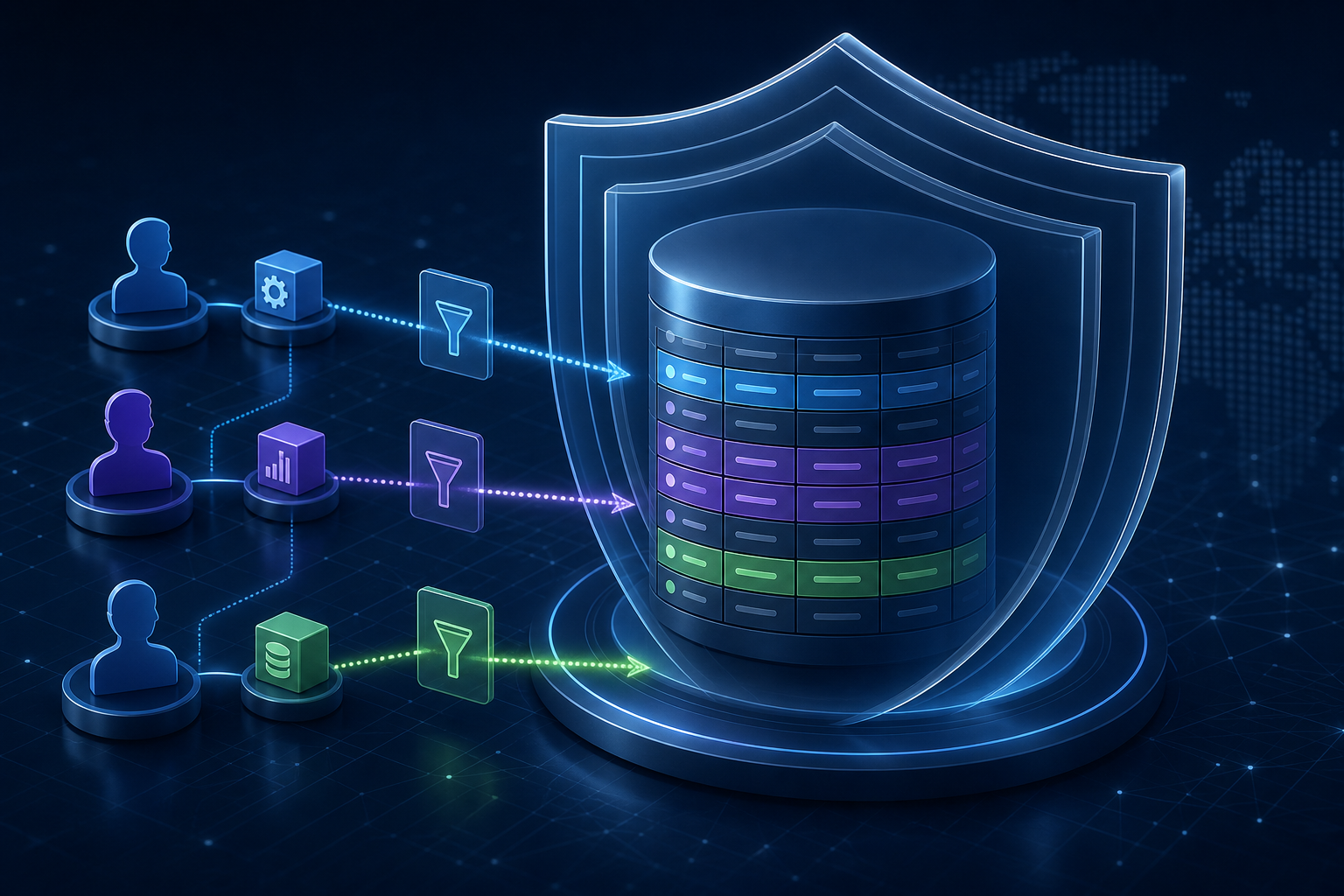
PostgreSQL row-level security gives you a database-enforced authorization layer that evaluates policy rules for each row a statement touches. That matters operationally because it reduces reliance on application discipline alone. It also changes how you design access paths: policies must match your tenant model, session context must be reliable, and privileged roles must be handled explicitly. After reading this article, you should be able to decide whether row-level security fits your tenant model, understand how policy evaluation works, apply a practical validation workflow, and know what to verify before production rollout.
Key takeaways
- Row-level security is most valuable when tenant isolation must be enforced inside the database, not just in application code.
- The policy design must start with a reliable way to identify the current tenant or caller context.
- Roles, table ownership, and bypass paths can silently weaken isolation if they are not designed deliberately.
- Policies should be validated with both positive and negative tests, including admin and migration paths.
- Production readiness depends on observability, regression checks, and a clear answer to who can bypass policies and when.
What row-level security changes in a multi-tenant design
Row-level security is not a replacement for application logic, indexing, or role design. It is an enforcement layer that sits inside query execution and filters rows according to policy expressions. In practice, that means a query can be syntactically correct and still return fewer rows than the application expected because the policy removed them. That is a feature, not a bug, but it means policy design must be treated as part of your functional model.
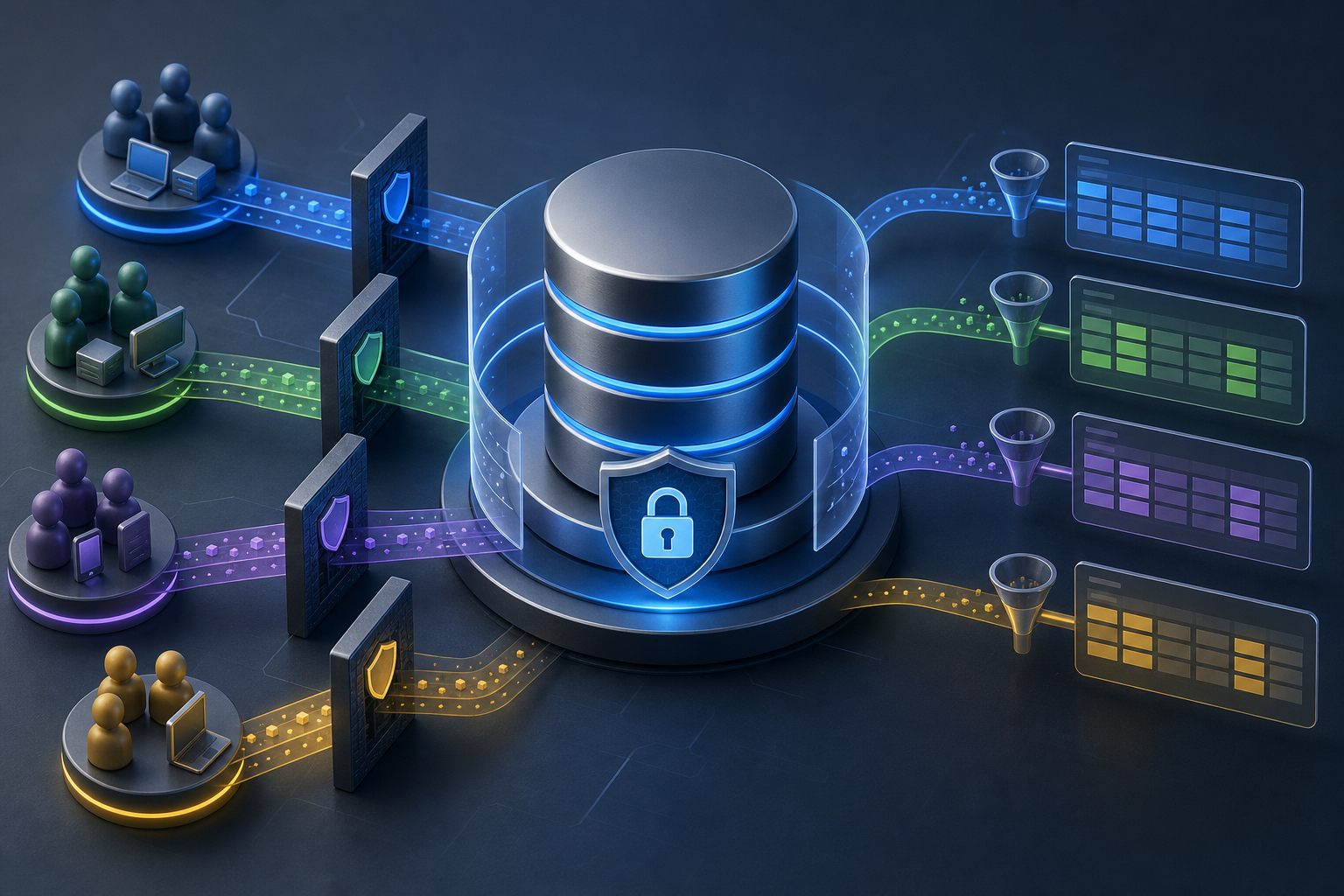
For multi-tenant systems, the key design question is whether every protected table can determine the active tenant context cheaply and consistently. The common pattern is to store a tenant identifier in each protected row and compare it to a session-scoped value or a value derived from the authenticated role. This often pairs well with separate authorization boundaries, which is why PostgreSQL Role-Based Access Control for Database Security is a useful companion concept: roles decide who can connect and what they can attempt, while row-level security decides which rows they can actually see or modify.
The most important distinction is between ownership and access. Table owners, superusers, and roles with bypass capability are not constrained in the same way as ordinary roles. If your tenant isolation story depends on a single policy, you must know exactly which roles are exempt.
How policy evaluation works in practice
A row-level security policy is evaluated per row for qualifying statements such as SELECT, UPDATE, DELETE, and, depending on policy definition, INSERT. A policy can allow access, reject access, or limit which rows can be written. For multi-tenant use, the most common model is a simple equality test between the row’s tenant key and a trusted session value.
The design challenge is that the database does not automatically know the user’s tenant unless you provide that context. You typically have three broad options: derive the tenant from the authenticated database role, set a session variable at connection time, or route each tenant through a dedicated role or connection pool. Each option can work, but each changes your operational trade-offs.
Session variables are flexible, but they must be set safely and consistently for every request. Role-derived tenant identity is simpler to reason about, but it can become unwieldy when one principal needs access to many tenants for support or background processing. Dedicated roles per tenant are rarely practical at scale, but they can be useful for high-isolation environments.
The policy itself should be easy to read and hard to misinterpret. A compact policy pattern for tenant isolation often looks like this:
ALTER TABLE app_orders ENABLE ROW LEVEL SECURITY;

CREATE POLICY tenant_isolation_select
ON app_orders
FOR SELECT
USING (tenant_id = current_setting('app.tenant_id')::uuid);

CREATE POLICY tenant_isolation_write
ON app_orders
FOR INSERT, UPDATE
WITH CHECK (tenant_id = current_setting('app.tenant_id')::uuid);
This example shows the core idea: the USING clause controls which existing rows are visible or writable, while WITH CHECK controls what new or changed rows are allowed to persist. In a multi-tenant system, both matter. If you only guard reads, a compromised or buggy path might still write rows into the wrong tenant. If you only guard writes, a query can still read another tenant’s data.
A compact workflow for designing policies
A practical design workflow is to move from tenant model to policy model to validation model, rather than starting with SQL syntax. The sequence below is intentionally compact because the main failure mode is not writing a policy at all; it is writing a policy that does not match the runtime identity model.
1. Define the tenant identity source
   - role name, session variable, JWT-derived claim, or trusted middleware context
2. Classify each table
   - tenant-scoped, shared, privileged, or administrative
3. Choose policy scope
   - read-only, write-only, or both
4. Identify bypass roles and maintenance paths
   - owner, migration, backup, support, batch jobs
5. Validate with positive and negative tests
   - tenant A sees tenant A, tenant A cannot see tenant B
6. Confirm operational visibility
   - logging, query plans, and app error handling
This workflow is useful because it forces you to answer the questions that usually surface only after an outage or a support incident. If you cannot describe who sets the tenant context, who can bypass policies, and how you will verify cross-tenant denial, the design is not ready.
A practical scenario you can recognize
Imagine a SaaS platform where one PostgreSQL cluster stores billing data for hundreds of customers. Each row includes tenant_id, and the application uses a pool of authenticated service connections. The product team wants support engineers to diagnose account issues, but they must not browse unrelated customer records. At the same time, nightly jobs reconcile invoices across all tenants.
This is a good row-level security use case because the database can enforce tenant filtering even if a service endpoint is misconfigured or a report query is reused in the wrong context. But it is also where policy mistakes happen. A support role that inherits broad privileges may bypass the policy entirely. A batch job that uses the wrong tenant context can silently write data under the wrong customer. And a migration script that runs as table owner may appear to work in staging but hide problems that only show up for ordinary tenant roles.
In this environment, the correct design is usually not one single policy for everyone. It is a combination of tenant-scoped policies for application roles, carefully limited maintenance roles, and explicit exception handling for jobs that need cross-tenant visibility. If support access is required, it should be narrow, auditable, and intentionally granted rather than implicit.
What this means in practice
In practice, row-level security changes where you put trust. The application can still participate by establishing tenant context, but the database becomes the final arbiter of what rows are returned or modified. That is a strong operational property, especially when multiple services, background jobs, and administrative workflows all touch the same tables.
The consequence is that policy design must be treated like schema design. It should be reviewed when you add a new table, change tenant ownership semantics, introduce a new privileged role, or alter a shared reporting path. If a table is tenant-scoped, it should normally have a clearly named tenant key, an enabled row-level security setting, and a policy that is easy to test.
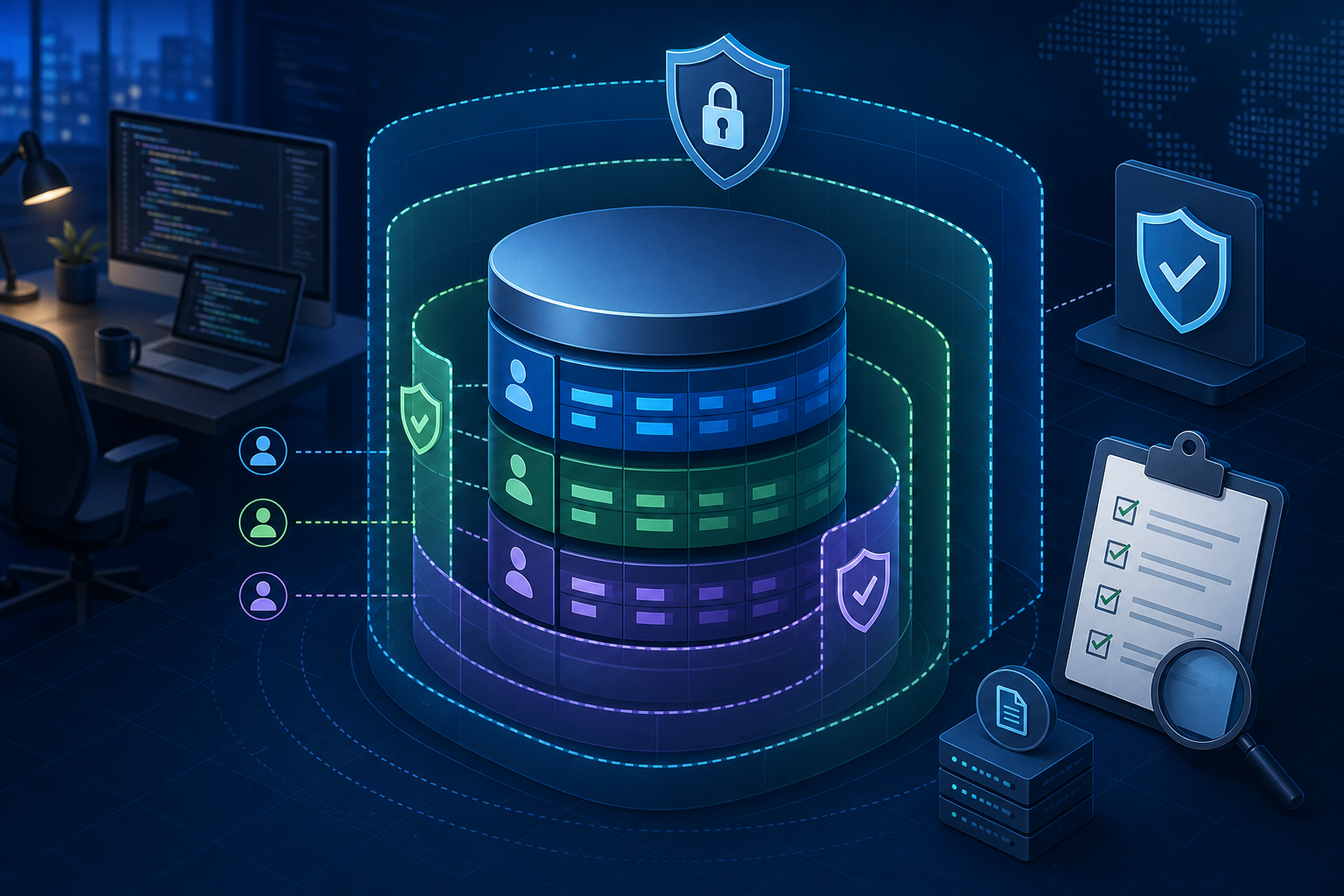
This is also where access control layering matters. Role permissions decide whether a session can touch a table at all; row-level security decides which rows it can touch once table access exists. That is why strong database role separation remains important even when RLS is enabled.
Decision guidance: when row-level security is the right fit
Row-level security is a strong choice when tenant isolation must be guaranteed inside the database and you have a reliable way to provide tenant context on every request. It is especially useful when multiple application services, ad hoc queries, or support workflows might otherwise bypass application-layer filters.
It is less attractive when tenant context is difficult to trust, when every query is already hard-partitioned by schema or database, or when cross-tenant reporting is the dominant access pattern and would require constant exception handling. In those cases, you may still use RLS, but the operational cost of bypass paths and context switching should be compared with alternative tenant isolation models.
A useful rule is this: if you cannot explain how a session learns its tenant and how you will prove that tenant B cannot read tenant A, then do not treat the design as production-ready. If you can explain both, row-level security is often a good fit.
Implementation trade-offs to weigh early
The first trade-off is simplicity versus flexibility. Session-based tenant context is flexible, but it introduces dependency on connection setup and pool hygiene. Role-based derivation is simpler, but it can be hard to scale across support, automation, and background processing.
The second trade-off is security versus operational convenience. Bypass roles make maintenance easier, but every bypass path increases the risk of unintended access. This is why exception roles should be few, well documented, and monitored.
The third trade-off is performance versus precision. Policy expressions that call functions or depend on session state can add overhead or make query behavior harder to predict. Simple comparisons on indexed tenant keys are easier to reason about and usually easier to tune. That said, policy complexity should be driven by security requirements, not by convenience alone.
The fourth trade-off is visibility versus abstraction. RLS can simplify application code by removing manual tenant predicates, but it can also make debugging more subtle because results depend on hidden policy evaluation. That is manageable if your team has good validation practices and clear role separation.
Common mistakes that weaken isolation
One common mistake is enabling row-level security but forgetting that some roles still bypass it. Table owners and privileged roles can behave differently from ordinary tenant sessions, so the policy is only as strong as the role model around it.
Another mistake is relying on an untrusted or inconsistently set session variable. If a connection pool does not initialize tenant context for every session, a request can inherit stale state or fail open in unexpected ways. The tenant value must be set by a trusted part of the request path, not by user input.
A third mistake is testing only the happy path. A tenant isolation policy must be validated with negative tests that try to read, update, and insert data for the wrong tenant. Without those tests, you may have only proven that the expected tenant can see its own rows.
A fourth mistake is overlooking shared tables and administrative paths. Some tables are meant to be global, and some roles are meant to see more than one tenant. Those exceptions should be explicit, documented, and reviewed rather than discovered during incident response.
Production readiness checklist
Before you move a row-level security design into production, verify the following:
- Each tenant-scoped table has row-level security enabled.
- Every policy has a clear tenant identity source.
USINGandWITH CHECKrules are both defined where writes occur.- The application sets tenant context through a trusted, repeatable mechanism.
- Bypass roles, owners, and maintenance paths are documented and intentionally limited.
- Positive and negative tests confirm cross-tenant isolation.
- Support and reporting workflows are accounted for explicitly.
- Monitoring and logs can help you distinguish authorization failures from application errors.
- Query behavior has been reviewed with representative tenant roles.
- The rollback plan is clear if a policy blocks legitimate production traffic.
Validation checks that catch real policy mistakes
The most useful validation is not merely confirming that tenants see their own rows. It is proving that the database behaves correctly under the roles your production system actually uses. Test with application roles, support roles, migration roles, and background-job roles. Then check whether the observed results match the intended access model.
A good validation pattern is to run one known-good query as the expected tenant and one identical query as a neighboring tenant. If the second session sees any protected rows, the policy is wrong. If the second session sees nothing but should have limited support access, the role model is wrong. If a write appears to succeed but the row does not fit the tenant key, the WITH CHECK logic is incomplete.
It is also worth validating how your connection pool handles session context. If tenant state is stored in a session variable, confirm that it is always initialized, cleared, or replaced at the right boundary. In pooled environments, stale context is a real operational risk, not a theoretical one.
Final takeaway
Row-level security is a strong design choice for multi-tenant PostgreSQL when tenant identity is trustworthy, role separation is deliberate, and policies are validated as production controls rather than as convenience filters. The database then becomes the final enforcement point for tenant isolation, which is exactly what you want when application paths grow, teams change, and exceptions accumulate. The safest approach is to design the tenant context first, write simple policies, test both allowed and denied access, and confirm every bypass path before production.
Use this guidance together with Always On Availability Groups troubleshooting to connect the workflow with related operational context already available on the site.
Use this guidance together with SQL Server execution plans and MySQL slow query log tuning to connect the workflow with related operational context already available on the site.