
Key takeaways
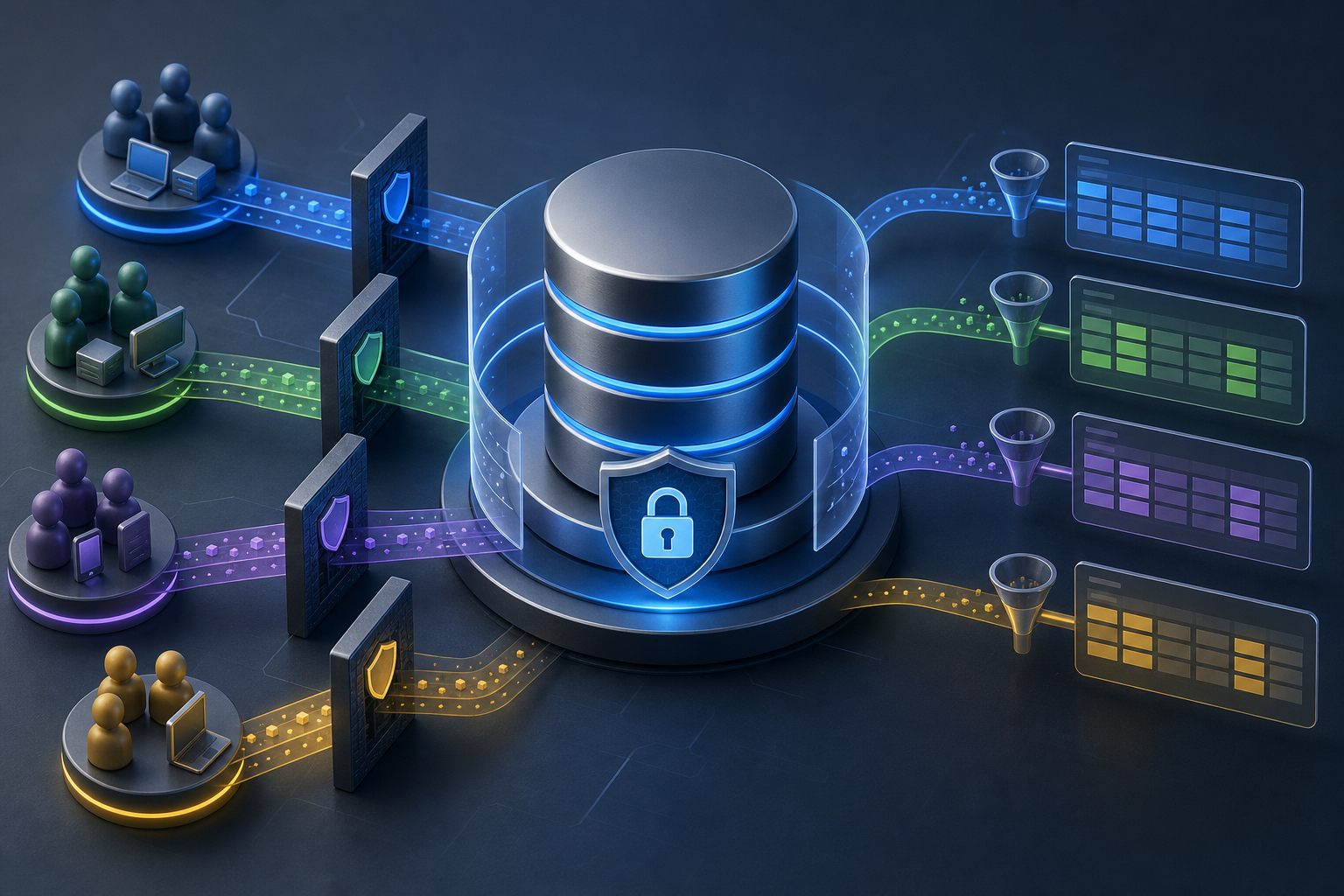
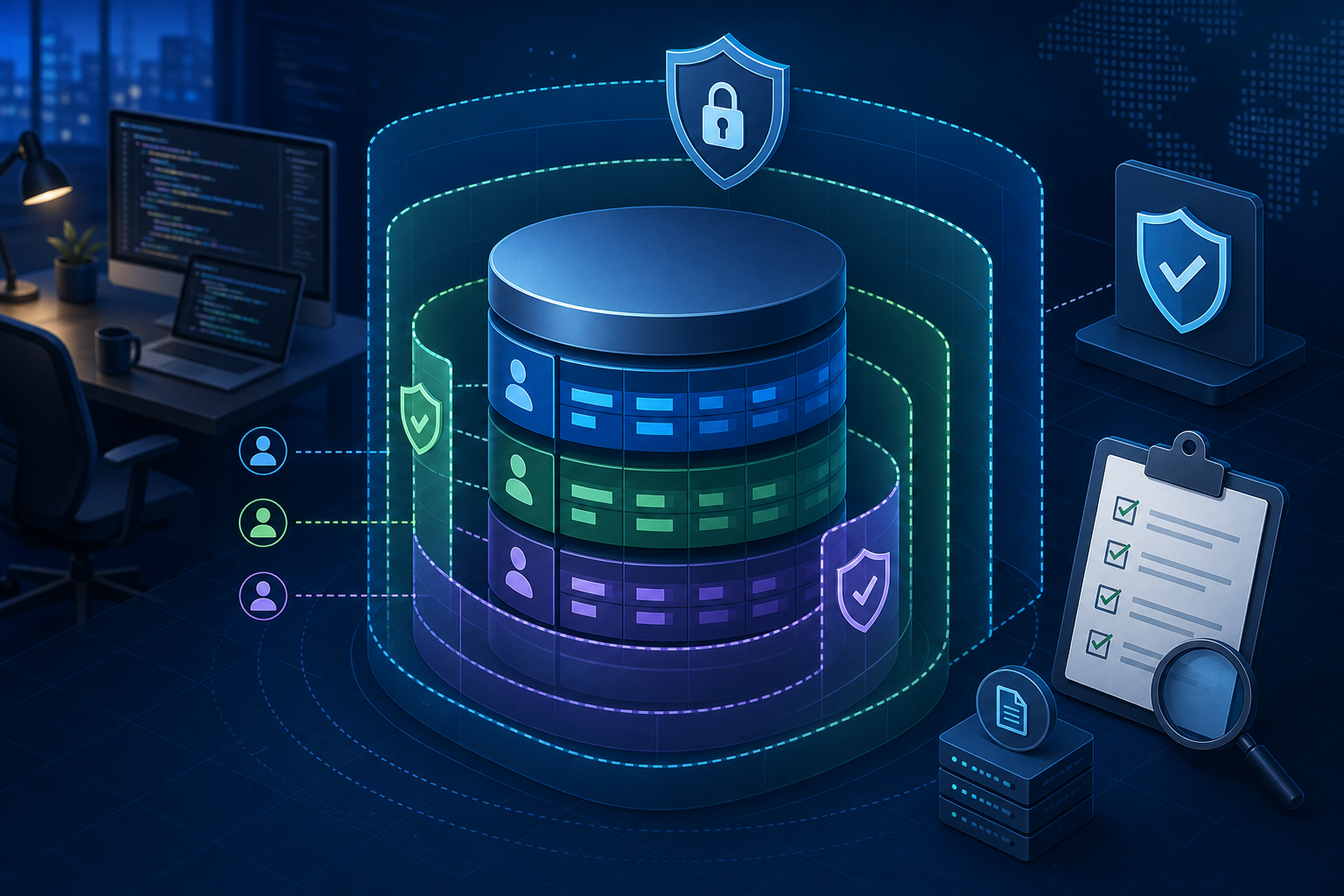
PostgreSQL row-level security (RLS) is the control that lets you decide which rows a role can read or modify, not just which tables it can reach. That matters when a single application, service account, or tenant-aware workload shares tables but should not see all records.
The practical value is simple: RLS moves part of the authorization boundary into the database, reducing reliance on application-side filters alone. Used well, it helps contain compromised credentials, limit accidental data exposure, and support tenant isolation without duplicating tables.
The main decision is not whether RLS is powerful; it is whether your access model is stable enough to encode in policies and whether your team can validate those policies continuously. RLS is effective when row ownership or tenant identity can be derived reliably from the session or request context.
Why row-level enforcement matters operationally
In many environments, table-level permissions are not enough. A service account may legitimately need to query orders, but not every order. A support tool may need to view customer records, but only for a specific tenant or assignment scope. Without row-level enforcement, application code must remember every filter on every query path, including reporting jobs, background workers, admin screens, and ad hoc SQL.
That approach is fragile. One missed predicate, one overbroad join, or one emergency query can expose more data than intended. RLS makes the database participate in the authorization decision, so a query that forgets its filter still cannot return rows outside policy.
This is why RLS pairs naturally with PostgreSQL Role-Based Access Control for Database Security: roles define who may connect and what tables or functions they may use, while RLS defines which rows they may actually see or change. Table privileges and RLS solve different layers of the problem.
How PostgreSQL row-level security works
RLS policies are attached to tables. When RLS is enabled on a table, PostgreSQL evaluates policy expressions for each row considered by a query. If the row does not satisfy an applicable policy, the row is invisible to that command.
The important operational point is that RLS does not replace privileges. A role still needs basic table permissions such as SELECT, INSERT, UPDATE, or DELETE. RLS then further narrows the rows those privileges can affect.
Policies can be defined separately for different commands. A role might be allowed to read only rows where tenant_id matches its session context, but modify only rows it owns. That makes RLS suitable for least-privilege access because read and write boundaries do not have to be identical.
RLS also interacts with how sessions identify the current user or tenant. In practice, policy conditions often reference session attributes, helper functions, or security-definer logic that derives an authorization scope from authenticated application context. The database then enforces that scope consistently across queries.
This model is strongest when the access rule is deterministic and easy to verify. It is weaker when the policy depends on complex application state, external services, or logic that changes frequently.
A compact workflow for deciding whether to use it
Define the protected rows
  -> Identify the scope key (tenant, owner, assignment, region)
  -> Choose the trusted identity source
  -> Write separate read/write policies
  -> Test direct SQL access and application paths
  -> Verify bypass roles, maintenance accounts, and migrations
  -> Monitor for policy errors and unexpected denials
This workflow is useful because the main failure mode is not syntax; it is incomplete scope modeling. If you cannot clearly answer which rows belong to which role, the policy will be hard to maintain.
A practical scenario you may recognize
Consider a multi-tenant SaaS platform with a shared invoices table. The application stores tenant_id on every row. Support engineers need to help customers, but they should only view invoices for tenants assigned to them. The application team wants to avoid maintaining separate invoice tables per tenant because that would complicate reporting and operational support.
In this environment, table-level permissions alone are too coarse. If the API layer misses a filter, a support tool query may return invoices from all tenants. RLS can enforce the tenant boundary even when the query path is imperfect.
The same pattern often appears in internal platforms with delegated administration. A central team can run broad reports, while local teams can only see resources for their region or business unit. RLS is a strong fit when the row contains the ownership or tenancy key and the application can supply a trusted scope for each request.
What this means in practice
In practice, RLS is best treated as a database-enforced guardrail, not a magical replacement for application authorization. It is most effective when the application still validates identity and scope, and the database enforces the final boundary.
That changes how you design queries and review changes. Every new table with sensitive data needs an explicit answer to three questions: what is the row scope, how is the scope conveyed to the database session, and what happens if the application forgets to set it?
It also changes how you think about debugging. A query that works for an administrator may fail for an application role because the policy hides rows rather than throwing a permission error. That is expected behavior. The response is not to weaken the policy; it is to test with the actual runtime role and session context.
If your model is already centered on roles and privileges, RLS is a natural extension. If your model depends on broad shared accounts or unpredictable ad hoc access, you will need stronger operational discipline before RLS becomes manageable.
Policy design patterns that tend to work
A common and reliable pattern is tenant-scoped access, where each row includes tenant_id and each session sets a trusted tenant context. Another is ownership-based access, where users may read or modify rows they created or were assigned to. A third pattern is bounded delegation, where support or operations roles can access rows only within a managed scope.
These patterns work because they are explainable and testable. The policy condition can usually be expressed as a straightforward comparison, and your test cases can prove which roles should see which rows.
For broader context on hardening database access models, combine RLS with role design, separation of duties, and narrow default privileges. RLS is strongest when the underlying role model is already disciplined and the application connects with the least privileged role that still supports its function.
Trade-offs and limitations
RLS adds a meaningful control, but it also adds complexity. Policy logic must be reviewed, versioned, and tested just like schema changes. If access rules are encoded inconsistently across tables, your authorization model will become difficult to reason about.
There is also an operational cost. Query behavior can change in ways that surprise developers who are used to table-level permissions alone. A join, view, or function may expose different results depending on which role executes it. That makes observability and repeatable testing important.
Another trade-off is administrative access. Backup operators, schema migration jobs, and emergency responders may need controlled bypass paths. Those bypasses should be explicit, narrow, and audited. A hidden bypass is a policy exception waiting to become a security incident.
Finally, RLS is only as strong as the trust boundary that feeds it. If the session-scoped tenant or ownership value can be spoofed by the application layer, the policy will faithfully enforce the wrong identity. The database cannot compensate for an untrusted upstream context.
Implementation decisions that matter most
Choose the row-scoping key carefully
Your policy should rely on a stable column or derived attribute that truly represents ownership or tenancy. If the scope key changes often or is ambiguous, the policy will become difficult to maintain.
Decide how the session gets its trusted context
RLS policies often depend on a value that identifies the active tenant, user, or assignment scope. Make sure that value is set in a controlled way and that the application cannot accidentally reuse an old session context.
Separate read and write rules
Read access and write access are rarely identical. A user may be allowed to see a row but not edit it, or update only specific fields. Separate policies make those distinctions explicit and easier to audit.
Verify maintenance and migration behavior
Schema migration roles, bulk loaders, and automation accounts often behave differently from application sessions. Confirm whether they need normal policy evaluation or a narrow exception, and make the exception visible in your controls.
Common mistakes
The most common mistake is assuming RLS is active simply because policies exist. The table must have RLS enabled, and the role must be tested under the real runtime path. A policy that looks correct in a script can still fail in production if the session context is missing.
Another frequent mistake is relying on superuser-like accounts or broadly privileged roles in everyday application traffic. Those accounts can bypass the very control you are trying to enforce, which defeats the least-privilege model.
A third mistake is writing policies that are too clever. If the condition is hard to explain, it is probably hard to maintain. Simple, explicit policies are easier to audit and safer to troubleshoot.
It is also easy to forget indirect access paths. Views, functions, reporting jobs, exports, and admin tools all need to be checked. RLS protects the table, but surrounding objects may change how the data is exposed or what role executes the access.
Validation checks before production use
Before you treat RLS as a production control, verify the actual behavior under representative roles and sessions. The goal is not just to prove that authorized access works; it is to prove that unauthorized access fails in the ways you expect.
A practical validation set usually includes:
- A normal application role can read only its intended rows.
- The same role cannot read rows from another tenant, owner, or assignment scope.
- The role can update only the rows allowed by policy.
- Session context is required and cannot be omitted silently.
- Maintenance or migration accounts are explicitly accounted for.
- Direct SQL from a lower-privileged account does not bypass the policy.
If you already use views or helper functions, test those paths separately. An application path that passes through a function may behave differently from ad hoc SQL because execution context matters.
Decision guidance: when RLS is a strong fit
Use RLS when the data is shared but the authorized row set is predictable, the boundary can be expressed in SQL, and you want the database to enforce the final access decision. That makes it a strong choice for multi-tenant systems, delegated administration, and ownership-based data models.
Be cautious when the authorization rule depends on rapidly changing business logic, external approvals, or complex per-request decisions that are hard to mirror in the database. In those cases, RLS may still help, but only if the scope can be reduced to a stable row filter.
A useful rule of thumb is this: if you can describe the allowed rows in one or two clear sentences and validate them with a small test matrix, RLS is probably a good fit. If you need a long exception list to make the rule work, the model may be too brittle for policy enforcement at the database layer.
Final takeaway
PostgreSQL row-level security enforces least-privilege access by turning row visibility into a database policy instead of a best-effort application convention. It is most valuable when you need consistent tenant, ownership, or delegation boundaries across many query paths.
The practical test is not whether RLS is available; it is whether your environment can define a stable row scope, supply trusted session context, and validate both allowed and denied access before production. When those conditions are met, RLS becomes a strong control for reducing data exposure without fragmenting your schema.
Use this guidance together with PostgreSQL row-level security to connect the workflow with related operational context already available on the site.
Use this guidance together with Oracle RMAN incremental backup and SQL Server index maintenance to connect the workflow with related operational context already available on the site.