Why model drift detection matters
Model drift detection is the difference between a machine learning pipeline that quietly degrades and one that fails visibly enough for engineers to intervene. In production, models rarely break all at once. More often, the relationship between features, predictions, and outcomes shifts gradually as traffic changes, data sources evolve, customer behavior moves, or upstream systems alter field semantics. That can turn a previously reliable model into a risk to operations, security decisions, or business metrics.
This matters because drift is not a single symptom. A model can show input drift while still performing acceptably, or it can lose accuracy without obvious changes in the feature distribution. For that reason, detection has to be operational rather than purely statistical: you need to know what to monitor, how to interpret the signal, and when a drift alert is strong enough to act on.
After reading this article, you should be able to decide whether model drift detection applies to your pipeline, choose a practical detection workflow, validate whether an observed change is meaningful, and verify what must be in place before treating drift monitoring as production-ready.
Key takeaways
- Drift detection should monitor more than one signal; input changes alone are not enough to prove model degradation.
- The best drift checks compare production data to a stable reference window and are calibrated to the business impact of the model.
- Alert quality matters more than alert volume: noisy drift signals create mistrust and waste operational time.
- A useful workflow separates detection, validation, and response so that one unstable metric does not trigger unnecessary rollback or retraining.
- Production readiness depends on baseline quality, feature lineage, label availability, and a clearly defined response path.
What model drift detection actually detects
At a practical level, model drift detection looks for meaningful change in one or more of these areas:
- Data drift: the statistical profile of input features changes compared with a baseline. For example, customer location mix shifts, request sizes increase, or null rates rise after an upstream deployment.
- Prediction drift: the distribution of model outputs changes. A classifier that used to emit balanced probabilities may suddenly overproduce high-confidence positives.
- Performance drift: the model’s measured quality on labeled outcomes degrades, such as lower precision, recall, calibration, or error rate.
These signals are related but not interchangeable. Data drift may be an early warning, prediction drift may indicate the model is reacting differently to inputs, and performance drift is the operational outcome you most care about. In mature pipelines, How to Detect Model Drift in Machine Learning Pipelines is usually framed around combining all three instead of relying on one metric alone.
The main challenge is that not every change deserves an incident. Seasonal behavior, product launches, schema normalization, sampling shifts, or delayed labels can all look like drift. That is why detection must be paired with validation rules that tell you whether a change is operationally relevant.
How drift detection works in a production pipeline
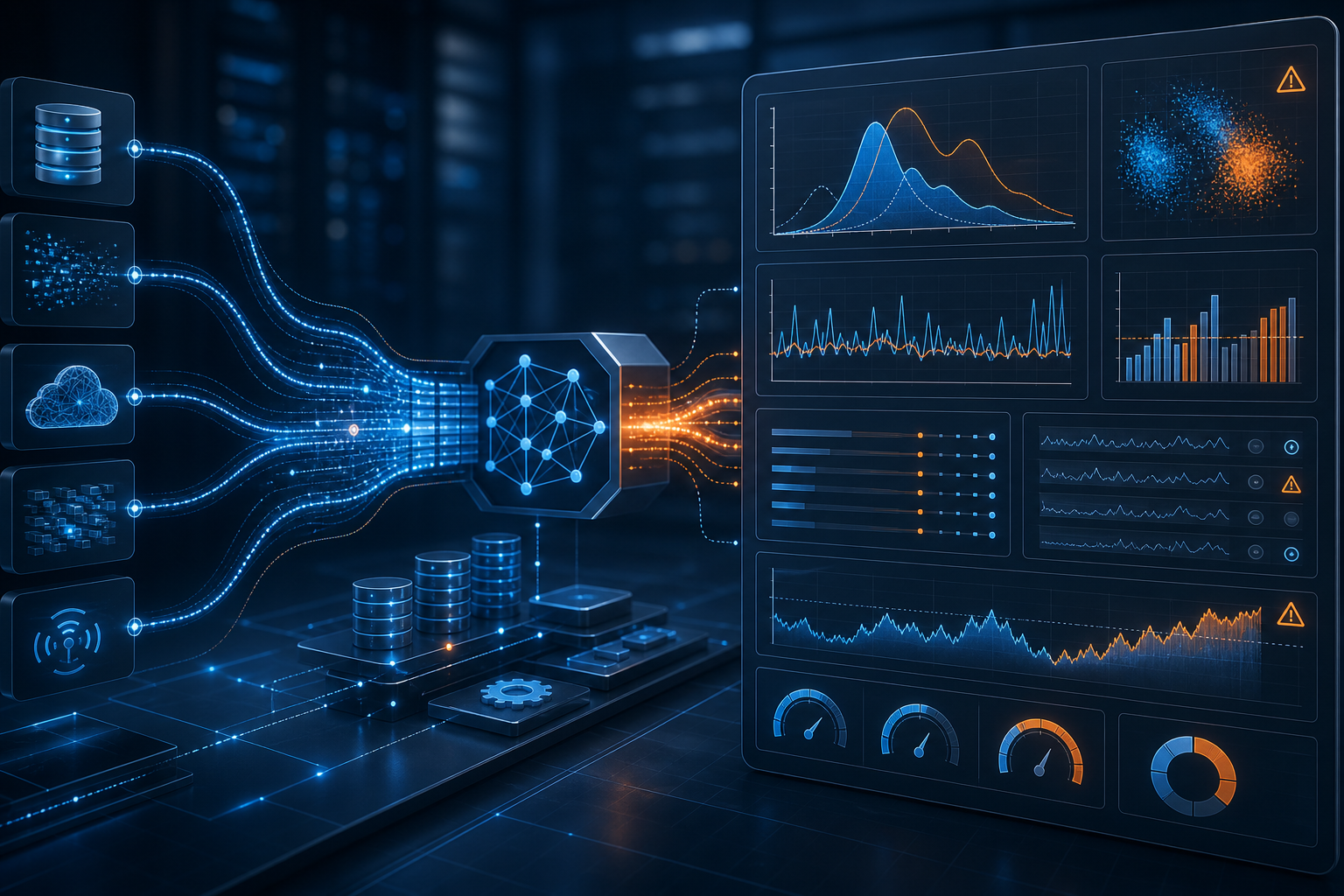
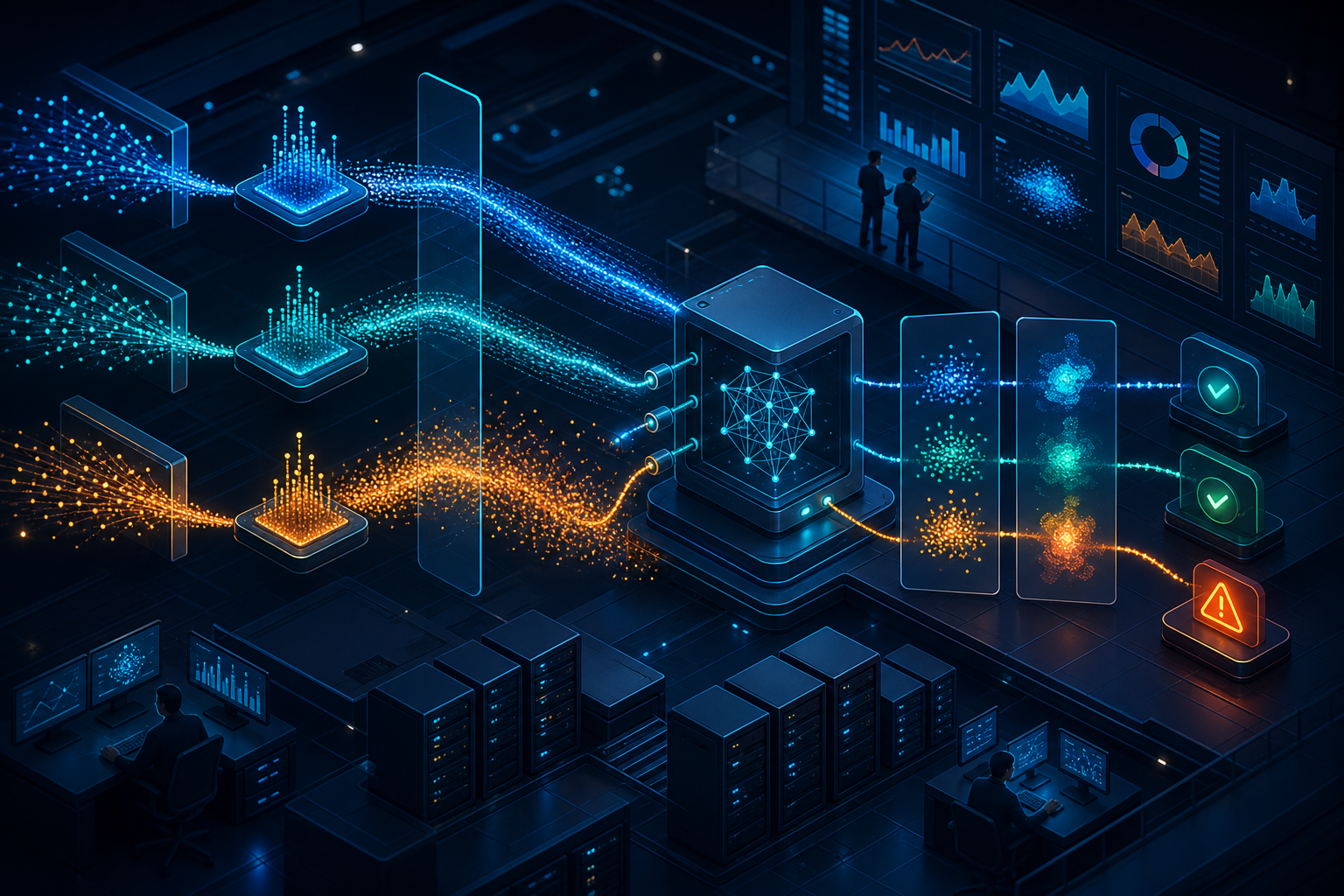
A production drift detection workflow usually compares live data against a reference distribution and then applies thresholds, tests, or scorecards to decide whether the change is unusual enough to investigate. The reference can be a training set, a recent stable production window, or a curated baseline chosen for business relevance.
For numeric features, detection commonly uses summary statistics, distribution distances, or bucketed comparisons. For categorical features, it often uses frequency changes, rare-category growth, or missing-value spikes. For predictions, you can watch class balance, confidence distributions, score calibration, or rank ordering over time. For labeled outcomes, you compare the model’s current behavior against expected performance on a holdout or rolling evaluation set.
A useful distinction is between signal generation and signal interpretation. Signal generation identifies a deviation; signal interpretation answers whether the deviation matters. If a feature’s population stability index increases, that may be a valid signal, but you still need to know whether the feature is important, whether the shift is expected, and whether downstream performance actually moved.
In security-sensitive or high-impact systems, this interpretation layer is critical. A drift alert that does not distinguish harmless traffic shift from model degradation can cause unnecessary retraining, unstable releases, or false confidence. In that sense, drift detection is not just monitoring; it is a control function.
A compact workflow for practical detection
Use this workflow when you want a production-oriented approach without turning monitoring into a research project:
1. Choose a stable reference window for each monitored feature and output.
2. Compare live production data against the reference on a fixed cadence.
3. Flag meaningful deviations using thresholds that reflect operational risk.
4. Validate flagged drift with data quality checks, feature lineage, and label-based metrics if available.
5. Classify the event as expected shift, benign noise, or likely degradation.
6. Escalate only when the drift signal is persistent, material, and aligned with business impact.
This workflow works because it separates observation from action. It also keeps your team from reacting to one-off spikes that disappear on the next batch.
What to monitor first
If you cannot monitor everything, start with the signals most likely to reveal real operational risk:
Input features with business importance
Focus on features that heavily influence decisions or are known to change with environment, user behavior, or upstream feeds. A small shift in a core feature can matter more than a large shift in a weak one.
Schema and data quality indicators
Missing values, type changes, unexpected categories, unit changes, and duplicate rates often reveal pipeline issues before the model’s metrics do. These are not drift in the strict statistical sense, but they frequently explain apparent drift.
Prediction distributions
Output scores, class probabilities, threshold crossings, and confidence bands are useful because they are always available, even when labels are delayed.
Label-based performance metrics
When outcomes arrive, track the metrics that actually reflect model value in your environment. For anomaly detection, that may be false positive rate. For fraud or abuse models, precision at operating thresholds may matter more than overall accuracy.
If you need a broader operational view of production model monitoring, Detecting AI Model Drift in Production Machine Learning Systems provides useful context for distinguishing drift from ordinary variation.
Practical scenario: when the pipeline looks healthy but the model is slipping
Consider a fraud detection model in a payments pipeline. Training data reflected a mostly card-present transaction mix, but production now has a higher share of card-not-present traffic after a checkout redesign. The feature distributions change gradually over two weeks. At the same time, the model’s average confidence increases because it is seeing more transactions that resemble historical fraud patterns, but the chargeback rate on reviewed cases rises later than expected.
If you only watch accuracy on delayed labels, you may miss the early warning. If you only watch input drift, you may overreact to a legitimate traffic change. The right response is to correlate the feature shift with output behavior and then confirm whether the performance drop is real once labels arrive.
That is the core operational value of drift detection: it gives engineers an evidence-based way to decide whether the model has become less trustworthy, or whether the environment simply changed in a way the model can still handle.
Decision guidance: when drift signals are worth action
Not every drift alert should trigger retraining or rollback. A practical decision rule is to ask three questions:
- Is the signal persistent? One batch or one hour of change is often noise.
- Is the change material? A statistically significant shift may still be operationally irrelevant.
- Does it affect a high-value path? Drift in a rarely used feature may not matter, but drift in a gating feature often does.
You should usually escalate when the answer is yes to all three. If the signal is persistent but the business impact is low, log and observe. If the impact is high but labels are delayed, preserve evidence and increase monitoring frequency instead of making a premature model change.
A good rule is to tie every drift threshold to an operational decision. If a threshold does not map to investigation, canary expansion, rollback, retraining, or manual review, it is probably too abstract to be useful.
Implementation trade-offs
Model drift detection is useful, but it comes with trade-offs that should be explicit before production rollout.
Sensitivity versus noise
Tighter thresholds detect smaller shifts, but they also increase false positives. Looser thresholds reduce alert fatigue, but they can hide early degradation. The right balance depends on how expensive a missed drift event is compared with how expensive an unnecessary investigation is.
Batch versus streaming evaluation
Batch checks are simpler and easier to explain, especially when your pipeline already operates on hourly or daily windows. Streaming checks provide faster detection but can amplify short-lived noise unless you smooth the signal or require repeated violations.
Reference window choice
A fixed training baseline is stable and reproducible, but it can become stale. A rolling production baseline adapts to normal seasonality, but it can also normalize drift if the model is gradually degrading. Many teams use both: training baseline for long-term change, rolling baseline for near-term shifts.
Feature-level versus model-level monitoring
Feature-level drift helps localize the source of change, but model-level performance is what the business ultimately cares about. Monitoring both is more reliable than choosing only one.
Labels now versus labels later
Some pipelines have fast labels; others do not. If labels are delayed, you need to rely more heavily on data and prediction drift, while being careful not to confuse environment shift with confirmed degradation.
Common mistakes
The most common drift monitoring mistakes are operational, not mathematical.
- Treating any distribution change as a failure.
- Monitoring raw feature drift without understanding feature importance.
- Ignoring delayed labels and then overreacting to proxy metrics.
- Using a stale baseline that no longer represents the intended operating environment.
- Alerting on too many features without ranking them by business impact.
- Rebuilding the model before checking for upstream data quality issues.
- Assuming drift detection is complete once a dashboard exists.
A particularly expensive mistake is to measure drift on transformed features without retaining lineage back to the original source data. If the monitored signal changes, you need to know whether the cause is upstream data collection, feature engineering, traffic mix, or the model itself.
What this means in practice
In practice, model drift detection should be treated as an evidence pipeline. You are not trying to prove that the world changed in some abstract sense. You are trying to determine whether the production model is still making acceptable decisions under current traffic conditions.
That means the monitoring design should answer four practical questions:
- Did the input distribution change?
- Did the model’s outputs change in a meaningful way?
- Did real-world performance change once labels arrived?
- Is the change large enough to justify action?
If your monitoring stack cannot answer at least the first three, you do not yet have a production-grade drift process. If it can answer all four, you have a workable operational control that helps avoid silent failure.
This also explains why drift detection should be integrated with release engineering. When a model, feature pipeline, or upstream source changes, the monitoring system should be able to compare pre- and post-change behavior. For environments that use containerized deployment and release gates, How to Deploy Secure ML Models with Containerized Pipelines is a relevant reference point for keeping model changes traceable.
Production readiness checklist
Use this checklist before relying on drift monitoring in production:
- A stable baseline is defined and documented for each monitored metric.
- Monitored features are tied to model importance or operational risk.
- Data quality checks run alongside drift checks.
- Prediction drift is monitored when labels are delayed.
- Performance metrics are available for at least the most important outcomes.
- Thresholds are mapped to specific actions or escalation rules.
- Alert suppression, persistence rules, or smoothing are in place to reduce noise.
- Feature lineage is available so root cause analysis can trace drift back to source systems.
- Ownership is clear for who reviews alerts and who approves retraining or rollback.
- The monitoring process is tested against known benign shifts and known failure cases.
If you cannot check most of these items, the safest assumption is that your drift monitoring is still informational rather than operational.
Final takeaway
Model drift detection is valuable when it helps you decide, with evidence, whether a production model is still fit for purpose. The practical goal is not to collect every possible drift metric; it is to build a monitoring path that separates harmless variation from meaningful degradation, supports root-cause analysis, and gives engineering teams a clear response rule before trust in the model erodes.
Use this guidance together with Python memory profiling to connect the workflow with related operational context already available on the site.
Part of the Programming: AI / Machine Learning Insights content cluster.