
Purpose
A Node implementation roadmap fails operationally when teams skip the checks that turn architecture intent into a deployable, supportable service. The common failure modes are predictable: incompatible Node versions, unclear module and package choices, missing security controls, weak deployment gates, and no evidence that the system can be operated safely after release.
Use this checklist to decide whether a Node implementation roadmap is ready to move from planning into build and rollout. After working through it, you should be able to confirm whether the approach fits your environment, apply a practical validation workflow, and verify what must be true before production use.
How to use this checklist
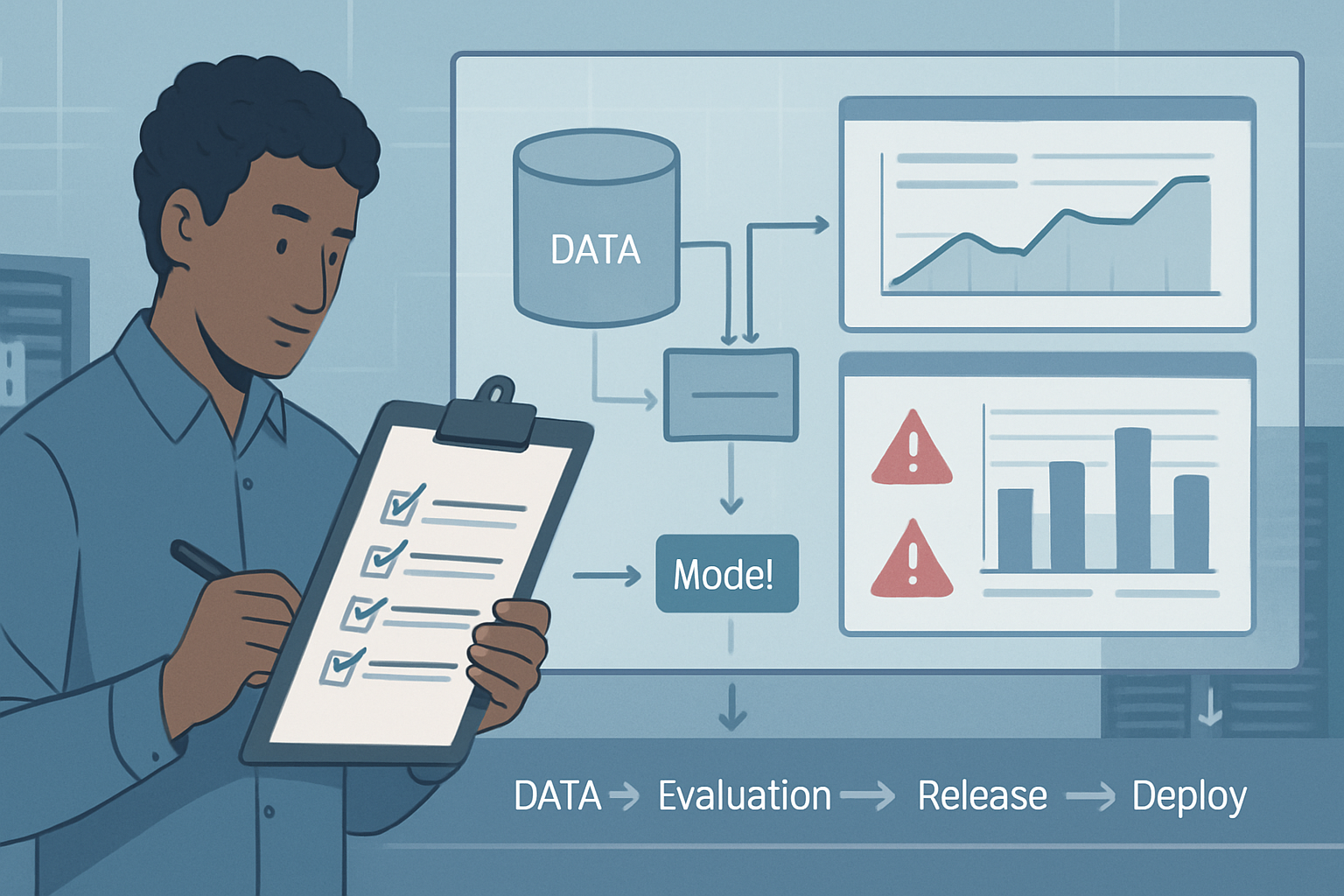
Treat each phase as a gated review. For every check, capture evidence, assign an owner, set a review cadence, and record pass/fail status. If any item in a phase fails, do not advance that phase until the gap is remediated or explicitly accepted with documented risk.
Use the checklist during roadmap design, architecture review, release preparation, and pre-production sign-off. If your roadmap includes multiple services, treat each service or shared platform component as a separate review scope.
Phase 1: Scope and delivery boundaries
Purpose: confirm the roadmap describes a realistic Node implementation target, the service boundaries are clear, and dependencies are understood before any build work starts.
Checklist items
- Confirm the business or operational problem the Node implementation will solve is stated in measurable terms.
- Review service boundaries and document what belongs inside the Node application versus external systems.
- Validate dependency ownership for databases, queues, caches, object storage, identity, and upstream/downstream APIs.
- Document expected request paths, batch jobs, background workers, and event-driven flows.
- Assign a named owner for each dependency and integration point.
- Confirm the roadmap identifies any service-level objectives, latency targets, availability targets, or throughput targets that will drive design choices.
- Review whether the workload is a fit for Node based on concurrency model, CPU intensity, and native dependency requirements.
- Document any external platform or vendor constraints that affect runtime choice, packaging, or deployment model.
Evidence to capture
Architecture note, dependency map, service boundary diagram, workload profile, and owner register.
Acceptance criteria
The roadmap defines a bounded Node service, all critical dependencies have named owners, and the target workload is appropriate for the runtime and delivery model.
Owner
Architecture lead or service owner, with input from platform and security reviewers.
Review cadence
At roadmap approval and whenever scope, integrations, or service objectives change.
Common mistakes
Teams often treat “Node service” as a generic label and defer dependency mapping until build time. Another common mistake is ignoring CPU-heavy processing or native module needs until late testing exposes a mismatch in the chosen runtime approach.
Phase 2: Runtime, package, and codebase standards
Purpose: confirm the implementation standard is repeatable, supportable, and compatible with the target runtime and deployment environment.
Checklist items
- Confirm the supported Node version range is explicitly documented.
- Validate the version policy for development, CI, staging, and production environments.
- Review whether the codebase will use CommonJS, ECMAScript modules, or a mixed approach, and document the rule.
- Confirm package manager selection is standardized and locked for the repository.
- Validate dependency pinning strategy, including direct, transitive, and workspace dependencies where applicable.
- Review native module usage and confirm build prerequisites are available in every target environment.
- Document a minimal directory layout, configuration pattern, and error-handling convention.
- Assign responsibility for runtime upgrades, dependency refreshes, and compatibility checks.
- Confirm the roadmap includes standards for linting, formatting, type checking, and test execution.
Evidence to capture
Version policy, package manifest standards, lockfile policy, build requirements, coding standards, and upgrade ownership.
Acceptance criteria
The implementation can be rebuilt consistently across environments, runtime choices are explicit, and dependency handling is controlled.
Owner
Lead engineer or platform engineer.
Review cadence
At repository bootstrap, before each runtime upgrade, and during dependency policy reviews.
Common mistakes
A frequent error is allowing each developer or service to choose a different package manager or Node version. Another is leaving module format decisions implicit, which leads to deployment failures or import issues later.
Phase 3: Security and supply-chain controls
Purpose: verify the roadmap includes security controls that can be evidenced before production use, not just added after implementation.
Checklist items
- Confirm secrets management is defined for local development, CI, staging, and production.
- Validate that no secrets, credentials, or private keys are stored in source control.
- Review dependency risk controls, including update policy, vulnerability review, and approval workflow.
- Document how packages will be sourced, verified, and promoted across environments.
- Confirm the roadmap includes static analysis, dependency scanning, and secret scanning in the delivery pipeline.
- Validate that authentication and authorization requirements are mapped for each exposed endpoint or worker path.
- Review input validation, output encoding, and request size limits for all untrusted data paths.
- Document logging rules so that sensitive fields are redacted before they reach logs or traces.
- Assign an owner for security exceptions and compensating controls.
Evidence to capture
Security control matrix, scan results, secret-handling standard, authorization model, and exception register.
Acceptance criteria
The roadmap defines enforceable controls for secrets, dependencies, input handling, and sensitive data handling, with evidence available for review.
Owner
Security engineer or application security reviewer.
Review cadence
At design approval, before every release train, and after any security exception or major dependency change.
Common mistakes
Teams often assume package locking alone is enough for supply-chain risk. It is not. You also need source controls, scan gates, and a documented process for accepting security exceptions.
Phase 4: Build, test, and quality gates
Purpose: make sure the roadmap defines verifiable quality gates that prevent unstable code from reaching staging or production.
Checklist items
- Confirm unit, integration, and end-to-end test scopes are defined for the service.
- Validate test data management for local, CI, and pre-production environments.
- Review how contract checks or schema validation will protect service interfaces.
- Document the minimum code coverage or risk-based quality threshold used by the team, if any.
- Confirm the roadmap includes failure-mode tests for timeouts, retries, partial dependency outages, and invalid input.
- Validate that build artifacts are reproducible from source and lockfile state.
- Review whether tests cover startup, shutdown, and graceful termination behavior.
- Assign ownership for flaky test triage and build failure response.
- Confirm Learning Checklist for AI and Machine Learning Projects and Learning Implementation Roadmap Checklist are only used as analogies if your Node roadmap includes model-dependent or data-processing components; otherwise keep the review focused on Node delivery controls.
Evidence to capture
Test plan, pipeline definitions, build logs, failure-mode test results, and artifact hash or checksum records.
Acceptance criteria
The roadmap defines repeatable quality gates, the build can be reproduced from controlled inputs, and failure cases are explicitly tested.
Owner
Lead developer or QA/engineering quality owner.
Review cadence
At each release candidate and after any change to test strategy, build tooling, or dependency policy.
Common mistakes
A common gap is relying on unit tests alone while leaving integration and shutdown behavior unverified. Another is using unstable test data that makes release decisions hard to defend.
Phase 5: Deployment, configuration, and release safety
Purpose: ensure the deployment model, configuration handling, and rollback plan are ready for controlled release.
Checklist items
- Confirm deployment target(s) are documented, including container, VM, serverless, or hybrid runtime.
- Validate environment-specific configuration is externalized and not hard-coded.
- Review startup checks so the service fails fast on invalid configuration or missing dependencies.
- Document deployment order for service, database migration, cache warm-up, queue consumers, or scheduled jobs.
- Confirm backward-compatibility rules for schema changes, API changes, and message formats.
- Validate rollout strategy, such as canary, blue-green, or phased release, matches the operational risk.
- Review rollback prerequisites and make sure rollback can be executed without undefined manual steps.
- Confirm operational runbooks include deployment verification checks and approval points.
- Assign who can approve promotion from staging to production.
Evidence to capture
Deployment plan, configuration matrix, migration plan, rollback runbook, and approval log.
Acceptance criteria
The service can be deployed with controlled configuration, rollback is practical, and release sequencing is documented and approved.
Owner
Release manager or platform engineer, with application owner approval.
Review cadence
At each release rehearsal, before production rollout, and after infrastructure or schema changes.
Common mistakes
Teams often document the happy-path deployment but omit rollback sequencing, database compatibility, or approval checkpoints. That omission turns an incident into a manual recovery exercise.
Phase 6: Observability and operational support
Purpose: confirm the roadmap defines how operators will detect issues, diagnose failures, and confirm service health after release.
Checklist items
- Confirm logs are structured and consistently include correlation identifiers where appropriate.
- Validate metrics exist for traffic, latency, errors, saturation, and dependency health.
- Review trace propagation or request correlation across service boundaries.
- Document alert thresholds and alert ownership for critical failure conditions.
- Confirm health checks distinguish between process uptime and real dependency readiness.
- Validate dashboards show production-relevant indicators rather than developer-only signals.
- Review error budgets, incident triggers, or operational escalation rules if the environment uses them.
- Confirm on-call or support ownership is documented for the first release window.
- Document how logs, metrics, and traces will be retained and accessed during incident review.
Evidence to capture
Dashboard screenshots or definitions, alert list, log format standard, tracing configuration, and support ownership record.
Acceptance criteria
Operators can detect failure quickly, correlate symptoms across systems, and identify an accountable owner for response.
Owner
SRE, platform engineer, or operations lead.
Review cadence
At service launch, after observability changes, and during incident postmortem follow-up.
Common mistakes
A service may appear healthy because the process is running, while downstream dependencies are failing. Another frequent mistake is alerting on too many low-value signals and missing the few that matter.
Phase 7: Production readiness review
Purpose: make the final go/no-go decision using evidence gathered in earlier phases, not assumptions.
Checklist items
- Confirm all phase owners have signed off on outstanding risks or remediation items.
- Validate every must-pass control has documented evidence attached to the review record.
- Review open defects and classify each one as blocking, non-blocking, or accepted risk.
- Document the release window, communications plan, and escalation contacts.
- Confirm monitoring, rollback, and support coverage are active for the launch period.
- Validate the service has passed production-like verification, including dependency failure handling.
- Review whether any roadmap item still depends on an unverified environment-specific assumption.
- Assign a timebox for post-release review and evidence collection.
Evidence to capture
Signed readiness record, exception list, defect triage, release schedule, and support roster.
Acceptance criteria
No blocking control remains unresolved, all risks are either remediated or accepted, and the release has accountable coverage.
Owner
Service owner, release approver, and operational support lead.
Review cadence
Immediately before production release and again after the first operational review window.
Readiness scoring
Use a simple maturity score to make the roadmap decision explicit. Score each phase from 0 to 3:
- 0 = not started or no evidence
- 1 = partially defined, major gaps remain
- 2 = mostly defined, minor gaps remain
- 3 = complete, evidenced, and approved
Add the six phase scores for a maximum of 21 points.
Scoring rule
- 18 to 21: Ready for production review, with only minor follow-up items
- 14 to 17: Conditional readiness, proceed only after closing documented gaps
- 10 to 13: Not ready, remediation required before release planning
- 0 to 9: Roadmap is immature, stop and rework scope or controls
A score should never override a blocking safety or security issue. If a phase has a failed must-pass control, treat the roadmap as not ready even when the total score is high.
Pass/fail decision rules
Use pass/fail criteria to avoid ambiguous approvals.
Pass when
- All must-pass checks in every phase are verified with evidence.
- Every exception has an owner, a rationale, and a documented expiry or review date.
- Deployment, observability, and rollback procedures are testable and understood by the operators who will use them.
- Security, dependency, and configuration controls are enforceable in the delivery pipeline.
Fail when
- The Node version policy is undefined or inconsistent across environments.
- Secrets handling, dependency review, or input validation is only described informally.
- Rollback depends on manual tribal knowledge.
- Observability cannot distinguish healthy uptime from failed service behavior.
- A critical dependency or integration owner has not been assigned.
Follow-up actions when the checklist does not pass
If the roadmap fails this review, convert each failed item into a tracked remediation task with an owner, due date, and evidence requirement. Re-run the affected phase only after the evidence is available, then update the readiness score and approval record.
If the roadmap passes conditionally, document the accepted risk in writing and set a review date before the exception can expire. If the roadmap fails broadly, pause implementation, rework the scope and dependency model, and repeat the phase 1 review before any code is merged.
Final takeaway
A Node implementation roadmap is ready only when scope, runtime standards, security controls, delivery gates, observability, and rollback are all verifiable. Use the checklist as a controlled release gate: evidence first, approvals second, production only after the service can be operated and recovered with confidence.
Use this guidance together with ASP checklist and algorithms best practices to connect the workflow with related operational context already available on the site.