
Quick version
The operational problem is simple: an MSP may want to use an AI or machine learning system to learn from tickets, alerts, or configuration changes, but learning in production can create drift, unexpected behavior, and compliance risk if it is not controlled. You need a repeatable way to decide whether the learning approach is safe to adopt, what evidence proves it is working, and how to roll it back if results degrade.
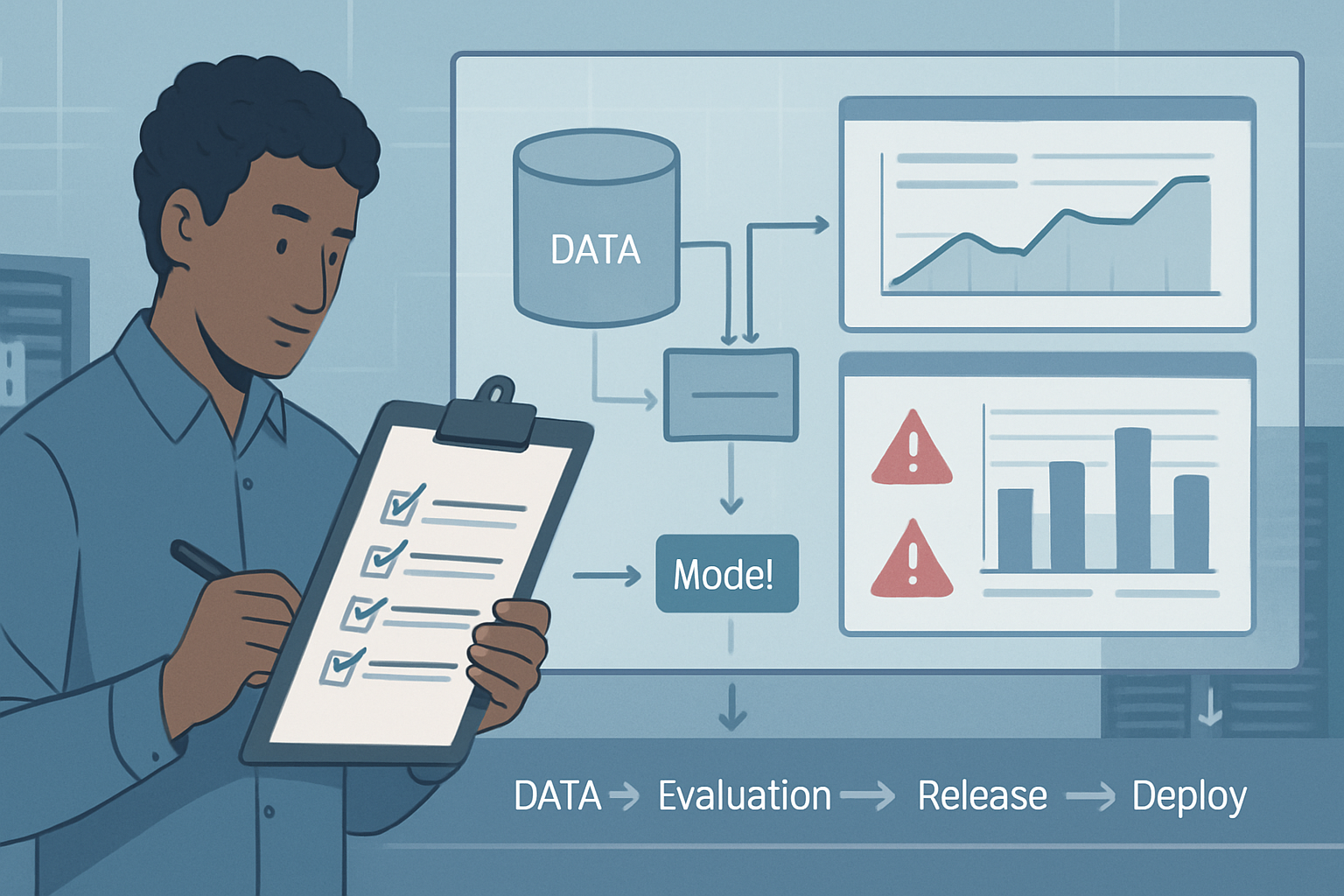
This guide shows you how to evaluate learning best practices for MSPs in a practical way. You will define the learning boundary, choose measurable success criteria, validate the behavior against real operational data, and set safe conditions for production use. By the end, you should be able to decide whether the approach applies, run a lightweight validation workflow, and know exactly what to verify before enabling it in a live service environment.
When this approach makes sense
Use this workflow when the system is expected to improve from operational data, such as classifying tickets, suggesting runbook steps, ranking alerts, or identifying recurring incidents. It is most useful when a human or automated control plane still exists to approve or reject changes before they affect customers.
Do not apply it blindly to every learning system. If the model directly changes routing, access control, remediation, or customer-facing responses, the bar for evidence must be higher. If you need a formal way to score whether the system is actually learning rather than merely changing, How to Measure Learning Maturity provides a practical evidence-based method you can use alongside this guide.
Prerequisites
Before you start, confirm the following items are available:
- A defined use case, such as ticket triage, alert grouping, or recommendation generation.
- Historical data with enough examples to test against, including known-good outcomes.
- A baseline process that represents the current operational method.
- A way to log inputs, predictions, human decisions, and final outcomes.
- A rollback path that can disable model-driven actions without stopping core service delivery.
- An owner who can approve production use, accept residual risk, and review exceptions.
If your team is still shaping requirements for an AI or machine learning workflow, the Learning Checklist for AI and Machine Learning Projects can help you confirm evidence, ownership, and acceptance criteria before you proceed.
Step 1: Define the learning boundary
Start by writing down exactly what the system is allowed to learn from, what it may change, and what it must never change automatically. This is the most important control point because many operational failures happen when a model is allowed to learn from noisy signals outside its intended scope.
For an MSP environment, good boundaries are narrow and concrete:
- Learn from resolved ticket history, not from unreviewed technician notes.
- Suggest a priority, but do not auto-close incidents.
- Group alerts for an analyst, but do not suppress alerts without approval.
- Recommend remediation steps, but do not execute them automatically unless a separate control is present.
Expected output: a one-paragraph policy statement that names the input sources, output type, and approval boundary.
Validation check: a reviewer should be able to read the statement and determine whether any single action is autonomous, advisory, or blocked.
Step 2: Choose the operational metric that matters
A learning system is only useful if it improves an operational outcome that the MSP already tracks. Avoid vague metrics like “better AI accuracy” unless they are tied to service delivery.
Use metrics that reflect real work, such as:
- Time to first useful action on a ticket.
- Percentage of recommendations accepted by engineers.
- Reduction in duplicate alert handling.
- Lower rework rate after suggested remediation.
- Faster classification of incidents into the right queue.
Define one primary metric and one safety metric. The primary metric tells you whether the learning behavior helps. The safety metric tells you whether it creates unacceptable operational cost, noise, or risk.
For example, if the system recommends ticket routing, the primary metric might be technician acceptance rate and the safety metric might be misroute rate for high-severity incidents.
Expected output: a metric definition with a baseline value, a target direction, and a review interval.
Step 3: Establish a human-reviewed baseline
Before enabling learning behavior, measure the current process without automation. This baseline gives you a direct comparison and prevents false confidence from anecdotal improvements.
Capture a representative sample of cases and record:
- The raw input or trigger.
- The human decision or action.
- The actual outcome.
- Any escalation or exception.
- The time required to complete the work.
If possible, include both common cases and edge cases. For MSP operations, rare but high-impact cases matter more than average cases because they expose where learning systems can fail dangerously.
Expected output: a baseline dataset or report that reflects current operational behavior.
Validation check: the sample should be large enough to include the types of cases you expect to automate or assist, not just the easy examples.
Step 4: Validate on historical data before production use
Run the learning workflow against historical cases first. The goal is not to prove the model is “smart”; it is to show that it performs consistently on cases similar to the ones it will see in production.
Compare the system output to the recorded human outcome and assess:
- Correctness on routine cases.
- Behavior on ambiguous cases.
- Handling of outliers.
- Stability across different data sources or teams.
- Failure patterns that repeat on specific categories.
If the system is a classifier or recommender, validate not only top-line accuracy but also the consequences of wrong answers. A model that is slightly less accurate but much safer on critical cases may be preferable in an MSP workflow.
Expected output: a short validation summary that identifies where the system helps, where it is uncertain, and where it should remain advisory only.
Step 5: Check whether it really learns over time
Some systems change because of new data, configuration drift, or retraining, but that does not automatically mean they are learning in a useful way. You need evidence that performance improves in the intended direction without introducing instability.
A practical way to judge this is to compare behavior across multiple review windows. Look for:
- Improved match to the baseline objective.
- Reduced manual correction rate.
- Fewer high-confidence wrong suggestions.
- Stable performance after data changes.
- No increase in severe error categories.
If performance changes but the operational result does not improve, the system may be adapting in a way that is not valuable. In that case, freeze learning, review the data pipeline, and inspect feature drift or label quality before continuing.
Step 6: Put controls around production rollout
Do not move directly from validation into full autonomy. Use a staged rollout so you can observe behavior under real load without creating a broad blast radius.
A safe rollout pattern is:
- Start in shadow mode and log predictions without affecting operations.
- Review a sample of cases manually.
- Enable advisory mode for low-risk cases only.
- Expand only after repeated validation.
- Keep a manual override for all high-severity workflows.
Set explicit stop conditions before rollout. For example, pause the system if misclassifications exceed an agreed threshold, if data quality drops, or if engineers begin overriding most outputs.
Expected output: a rollout plan with phases, review owners, and stop conditions.
Validation check: any operator should know how to disable the learning behavior quickly without affecting unrelated services.
Step 7: Define rollback and cleanup procedures
A learning system that cannot be safely reverted is not production-ready. Rollback must restore the previous stable behavior, not just hide the model output.
Your rollback plan should cover:
- Turning off automated decisions.
- Reverting to the baseline workflow.
- Preserving logs for post-incident review.
- Clearing or freezing bad training data.
- Preventing retraining on corrupted or biased samples.
Cleanup matters too. After a failed pilot or bad retraining run, remove only the affected artifacts and keep enough evidence to explain what happened. That includes version identifiers, data snapshots, and approval records.
Expected output: a documented rollback runbook that can be followed under incident pressure.
Step 8: Review governance and access controls
Learning systems in MSP environments often touch sensitive operational data, including customer identifiers, credentials-adjacent context, topology details, and incident history. That means learning best practices are not only technical; they are also governance controls.
At minimum, verify the following:
- Who can change training data.
- Who can approve retraining.
- Who can promote a model to production.
- Which data sources are excluded.
- How access is logged and reviewed.
If your learning system uses role-based approvals or change tracking, align those controls with your existing incident and change management process. The system should not bypass normal operational review just because it is automated.
Step 9: Monitor for drift, exceptions, and operator trust
After production use begins, monitoring must focus on operational behavior, not just infrastructure health. A healthy service can still produce bad recommendations.
Track:
- Prediction volume by category.
- Manual override rate.
- Error rate on high-severity cases.
- Data freshness and schema changes.
- New exception patterns that did not appear in validation.
Also watch operator behavior. If engineers stop trusting the system because it is noisy, they will ignore valid recommendations too. That is a practical failure mode, not just a user-experience issue.
A useful reference point for operational readiness is whether the system passes the evidence and acceptance checks in a structured review. If you need a repeatable way to judge that readiness, pair this workflow with the Learning Checklist for AI and Machine Learning Projects.
Common failure modes to avoid
A few patterns show up repeatedly in MSP learning workflows:
- Training on incomplete labels, which teaches the system the wrong pattern.
- Optimizing for accuracy while ignoring the cost of rare critical errors.
- Allowing the model to learn from technician shortcuts or temporary workarounds.
- Mixing advisory and autonomous outputs in the same workflow.
- Skipping shadow testing and discovering problems only after customer impact.
The safest rule is simple: if the system changes a decision that matters, you need evidence that the change is both repeatable and reversible.
Example decision rule for go-live
You can use a straightforward go/no-go rule before production use:
- The learning boundary is documented and approved.
- The baseline is measured and reproducible.
- Historical validation meets the primary metric target.
- No critical safety metric regresses beyond the accepted threshold.
- Rollback can be executed without affecting unrelated services.
- The owner accepts the residual risk and review cadence.
If any one of these is missing, keep the system in advisory or shadow mode.
Final takeaway
For MSPs, learning best practices are not about making a model more complex; they are about making its behavior operationally safe, measurable, and reversible. The best workflow is to define a narrow learning boundary, validate against historical cases, stage rollout carefully, and keep clear rollback and governance controls in place. If you can explain the system’s inputs, outputs, success metrics, and stop conditions in plain operational terms, you are close to a production-ready learning process.
Part of the Programming: AI / Machine Learning Insights content cluster.