
Purpose
A JavaScript implementation roadmap fails in practice when teams treat it as a planning document instead of an executable sequence of technical decisions, validations, and handoffs. That creates predictable operational problems: unclear module boundaries, inconsistent build behavior, missing security controls, unverified deployment paths, and no owner for runtime support.
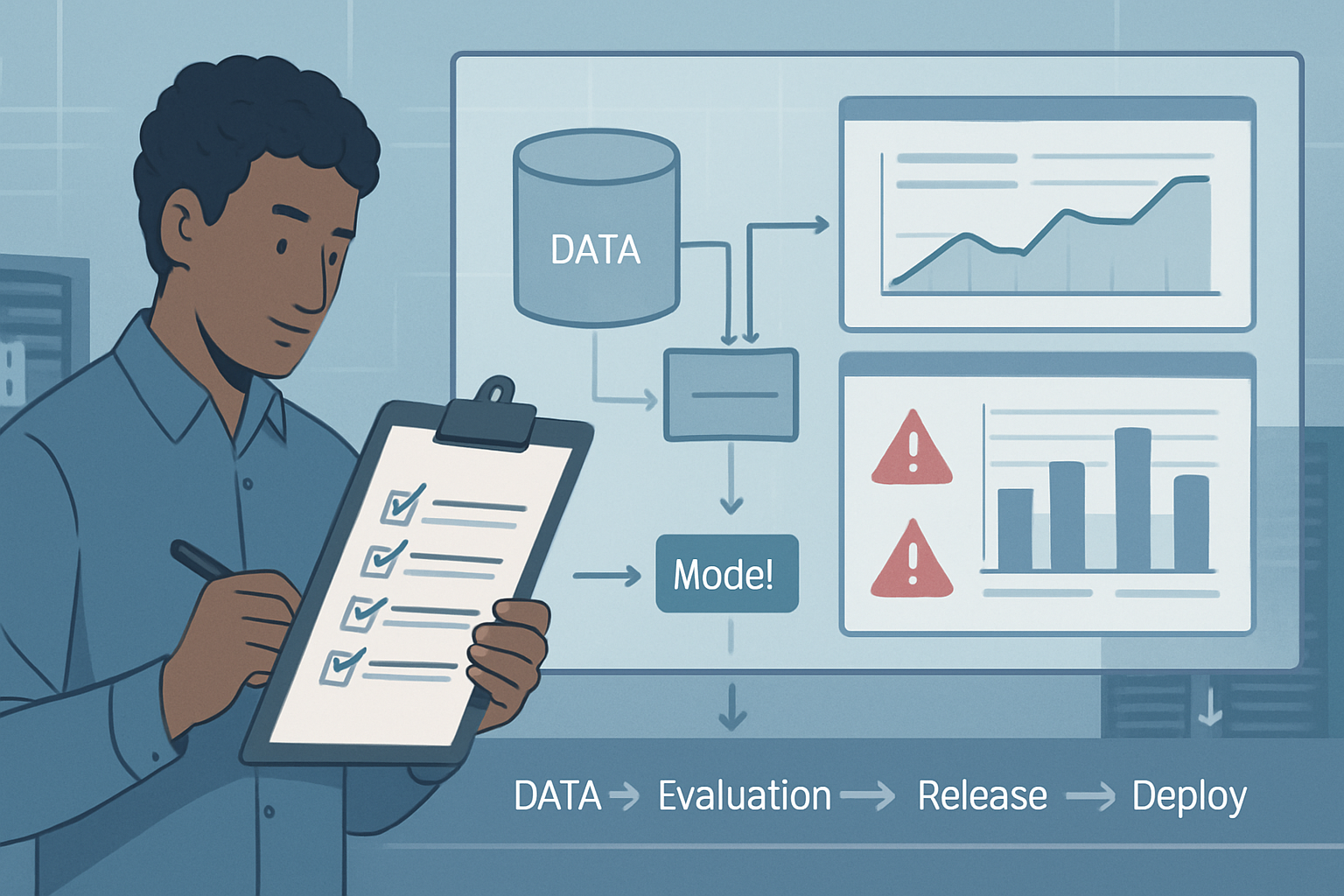
Use this checklist to confirm that a JavaScript implementation roadmap is specific enough to drive delivery and safe enough to support production use. After working through it, you should be able to decide whether the roadmap is ready to execute, validate the implementation approach, and verify what must be proven before release.
How to use this checklist
Review the roadmap phase by phase and collect evidence as you go. For every checkbox, capture the artifact that proves the item is true: a design note, repo link, architecture diagram, CI job, test report, security review, or runbook. If a check cannot be verified, mark it as not ready and assign an owner before the project advances.
Use the acceptance criteria as a pass/fail gate, not a soft guideline. If the roadmap depends on framework version, package manager behavior, browser support, runtime type, or infrastructure limits, verify those assumptions explicitly before implementation starts.
1. Scope and delivery definition
This phase confirms that the roadmap describes a buildable JavaScript implementation with a bounded goal, named deliverables, and measurable acceptance criteria.
- Confirm the implementation goal is stated in one sentence and maps to a specific business or technical outcome.
- Review the target runtime, such as browser, Node.js, serverless function, or hybrid execution model, and document the supported versions.
- Validate the application boundary by listing what is included, what is excluded, and any upstream or downstream dependencies.
- Document the functional requirements as testable user or system behaviors, not as vague feature descriptions.
- Assign a single technical owner for scope decisions and change approval.
- Confirm the roadmap identifies hard constraints, including latency, throughput, compliance, data residency, or offline support if applicable.
- Review whether the implementation path depends on TypeScript, transpilation, polyfills, or specific ECMAScript features.
- Validate the definition of done for the roadmap phase, including delivery artifacts and sign-off criteria.
Evidence to capture:
- Scope statement
- Requirement list
- Runtime support matrix
- In-scope / out-of-scope decision log
- Definition of done
Acceptance criteria:
- The scope is concise, measurable, and approved.
- Runtime assumptions are explicit and versioned.
- No major dependency or constraint is implied but undocumented.
Owner:
- Product owner or technical lead
Review cadence:
- At roadmap creation and after any major scope change
Common mistake to avoid:
A roadmap that names features but never states the target runtime or release boundary usually becomes untestable later. If you need a broader implementation governance template for comparison, the JavaScript Checklist for Production Readiness can help validate the production gate separately from the delivery plan.
2. Architecture and module design
This phase checks whether the proposed JavaScript structure can be implemented, maintained, and changed without creating hidden coupling.
- Confirm the codebase organization is documented, including package layout, module boundaries, and shared utilities.
- Review the chosen module system and bundling strategy, including ESM, CommonJS, or mixed compatibility where relevant.
- Validate that state management, data flow, and side effects have clear ownership boundaries.
- Document all external dependencies, internal libraries, and cross-service integrations.
- Assign ownership for each major component or package.
- Test whether the roadmap accounts for code splitting, lazy loading, or server-side rendering if the application requires them.
- Review whether the design avoids circular dependencies and duplicated business logic.
- Confirm the architecture includes fallback behavior for failed dependency calls, unavailable data, or partial feature degradation.
- Validate that shared contract shapes are versioned when multiple services or teams consume the same interface.
Evidence to capture:
- Architecture diagram
- Module map or package tree
- Dependency inventory
- Interface contract definitions
- Ownership matrix
Acceptance criteria:
- Each major module has a clear purpose and owner.
- Dependency directions are understood and documented.
- The design includes graceful failure handling where needed.
Owner:
- Solution architect or senior engineer
Review cadence:
- At design approval and whenever module boundaries change
3. Tooling, build, and environment readiness
This phase verifies that the implementation can be built consistently across developer machines, CI, and target environments.
- Confirm the required Node.js, package manager, and operating system versions are documented.
- Review whether the roadmap specifies lockfile strategy and dependency installation behavior.
- Validate that the build process is reproducible from a clean checkout.
- Document environment variables, secrets handling, and config file locations.
- Assign ownership for local development setup and CI pipeline maintenance.
- Test that linting, formatting, type checks, and build steps are automated.
- Review whether the roadmap specifies browser compatibility or polyfill requirements when the app targets front-end execution.
- Confirm the implementation defines how preview, staging, and production environments differ.
- Validate that the build output is inspected for size, tree-shaking effectiveness, or source map handling where relevant.
Evidence to capture:
- Toolchain version list
- CI pipeline definition
- Build logs from a clean environment
- Environment configuration inventory
- Package lockfile or equivalent dependency lock artifact
Acceptance criteria:
- The same source revision builds reliably in CI and in the documented target environment.
- Required runtime and toolchain versions are pinned or explicitly governed.
- Configuration and secret handling are documented and separation of environments is clear.
Owner:
- DevOps engineer or build engineer
Review cadence:
- At pipeline creation, after dependency upgrades, and before release
4. Security, privacy, and supply chain controls
This phase ensures the roadmap covers JavaScript-specific risk areas such as dependency trust, client-side exposure, secret handling, and unsafe data handling.
- Confirm the roadmap includes dependency review for direct and transitive packages.
- Review whether source code uses safe patterns for input validation, output encoding, and DOM handling if browser code is involved.
- Validate that secrets are never stored in client-side code, committed files, or build artifacts.
- Document the approach for authentication, authorization, and session handling where the implementation touches protected data.
- Assign a reviewer for security-sensitive changes and dependency updates.
- Test whether the plan includes static analysis, dependency scanning, and secret scanning in the delivery pipeline.
- Confirm that logging and telemetry exclude sensitive fields unless there is a documented, approved requirement.
- Review the security assumptions for third-party scripts, content delivery layers, and runtime permissions.
- Validate that the roadmap defines how security findings block release or trigger remediation.
Evidence to capture:
- Security review record
- Dependency scan report
- Secret scan output
- Data handling or privacy notes
- Approved exception log
Acceptance criteria:
- No unresolved high-risk dependency or secret exposure issue remains.
- Sensitive data handling is documented and approved.
- Security checks are part of the normal delivery pipeline.
Owner:
- Security engineer or application security reviewer
Review cadence:
- At roadmap approval, after dependency changes, and before production release
Common mistake to avoid:
Teams often verify application code but ignore packages, build-time assets, and client-visible configuration. That gap is where many implementation plans fail operational review.
5. Testing and validation coverage
This phase confirms that the roadmap includes tests that prove the JavaScript implementation works as intended under normal and failure conditions.
- Confirm the roadmap defines unit, integration, and end-to-end test coverage where each is needed.
- Review the critical user and system paths that must be validated before release.
- Validate that failure cases, boundary values, and retry behavior are included in the test plan.
- Document the required test data and how it is created, masked, refreshed, or destroyed.
- Assign a test owner for each critical functional area.
- Test whether the implementation has deterministic automated tests that can run in CI.
- Review how browser, network, and dependency failures are simulated where relevant.
- Confirm the roadmap includes regression checks for bugs that are fixed during delivery.
- Validate that test results are retained and linked to the release candidate.
Evidence to capture:
- Test plan
- Automated test report
- Manual verification notes for high-risk flows
- Test data handling procedure
- Regression issue list
Acceptance criteria:
- Critical flows have automated verification.
- Failure paths are explicitly tested.
- Test evidence is available for the release candidate.
Owner:
- QA lead or engineering owner
Review cadence:
- At test plan approval, after major code changes, and before each release candidate
6. Deployment, rollout, and rollback
This phase checks whether the roadmap can be released safely and reversed if runtime behavior is not acceptable.
- Confirm the deployment target, release method, and approval path are documented.
- Review whether the rollout strategy uses phased exposure, feature flags, or canary validation when appropriate.
- Validate that rollback steps are defined and can be executed without guesswork.
- Document any database, cache, queue, or state migration that must be coordinated with the JavaScript release.
- Assign an operational owner for the deployment window.
- Test whether release artifacts are versioned and traceable to source control.
- Confirm the roadmap defines smoke tests or post-deploy checks that verify the system is usable after release.
- Review whether rollback conditions are objective, such as error rate increase, build failure, or broken critical path.
- Validate that deployment prerequisites, including secrets and environment configuration, are present in the target environment.
Evidence to capture:
- Deployment runbook
- Rollback plan
- Release artifact version
- Post-deploy smoke test results
- Migration checklist if applicable
Acceptance criteria:
- Deployment and rollback are both documented and rehearsed.
- Post-deploy verification is defined and reproducible.
- Release ownership is clear for the change window.
Owner:
- Release manager or DevOps engineer
Review cadence:
- At release planning, before each deployment, and after incident review
7. Observability and operational support
This phase confirms the roadmap includes enough telemetry and support material to detect and diagnose failures after launch.
- Confirm the implementation emits logs, metrics, or traces for the most important runtime events.
- Review whether error handling produces actionable messages without leaking sensitive data.
- Validate that alert thresholds or detection rules are defined for critical failure modes.
- Document the runbook for common incidents, including failed deploys, client-side errors, and dependency outages where relevant.
- Assign a support owner for the first production period.
- Test whether health checks, synthetic checks, or smoke tests cover the key runtime path.
- Confirm that operational dashboards or reports are available to the responders who need them.
- Review the retention period and access controls for logs and traces.
- Validate the handoff process from the delivery team to operations or support.
Evidence to capture:
- Logging and metrics specification
- Alert rules or alerting design
- Runbook
- Dashboard links or screenshots
- Support handoff record
Acceptance criteria:
- The team can detect and investigate the main failure modes.
- Support ownership is assigned and documented.
- Observability data is available without exposing sensitive information.
Owner:
- Operations lead or platform engineer
Review cadence:
- At operational readiness review and after each production issue
8. Readiness scoring and release decision
Use a simple score to make the roadmap decision explicit. This is not a substitute for judgment; it is a way to expose weak areas quickly.
Score each phase:
- 2 points: All checklist items verified, evidence captured, acceptance criteria met
- 1 point: Some items verified, minor gaps remain with a documented owner and due date
- 0 points: Major gaps, missing evidence, or no clear owner
Scoring interpretation:
- 12 to 16 points: Ready to execute with normal oversight
- 8 to 11 points: Conditionally ready; proceed only with named remediation and a date
- 0 to 7 points: Not ready; pause implementation until critical gaps are closed
Pass/fail rule:
If any of these are true, treat the roadmap as failed for production use:
- Confirm a critical runtime assumption is unverified.
- Review whether a security or dependency risk has no owner or remediation plan.
- Validate that rollback or post-deploy verification is missing.
- Document whether critical test coverage is absent for the main user path.
9. Concrete follow-up actions when the roadmap is not ready
If the checklist exposes gaps, keep the follow-up work specific and time-bound. Avoid reopening the whole plan unless the scope itself is wrong.
- Assign the missing owner for each failed check.
- Document the exact evidence required to close the gap.
- Set a review date for each unresolved item.
- Reduce scope if the roadmap depends on assumptions that cannot be verified quickly.
- Freeze release approval until all fail conditions are cleared.
- Re-run the readiness score after remediation and keep the earlier score in the review record.
A JavaScript implementation roadmap is only useful when it can be defended with evidence. If the plan is clear, testable, secure, and operationally supportable, it is ready to move from design into delivery. If not, the missing check usually tells you exactly which assumption still needs proof.
Use this guidance together with learning implementation roadmap checklist to connect the workflow with related operational context already available on the site.
Use this guidance together with python checklist to connect the workflow with related operational context already available on the site.