Key takeaways
Isolated AWS virtualized workloads are not automatically secure just because they sit in a private subnet or inside a separate account. The real security boundary is a combination of network segmentation, identity control, hardened instance configuration, logging, and disciplined change management.
The practical goal is to make each workload difficult to reach, difficult to misuse, and easy to validate. If you can answer who can access the workload, what it can reach, which controls enforce that access, and how to prove those controls still work after change, you are operating in a much safer posture.
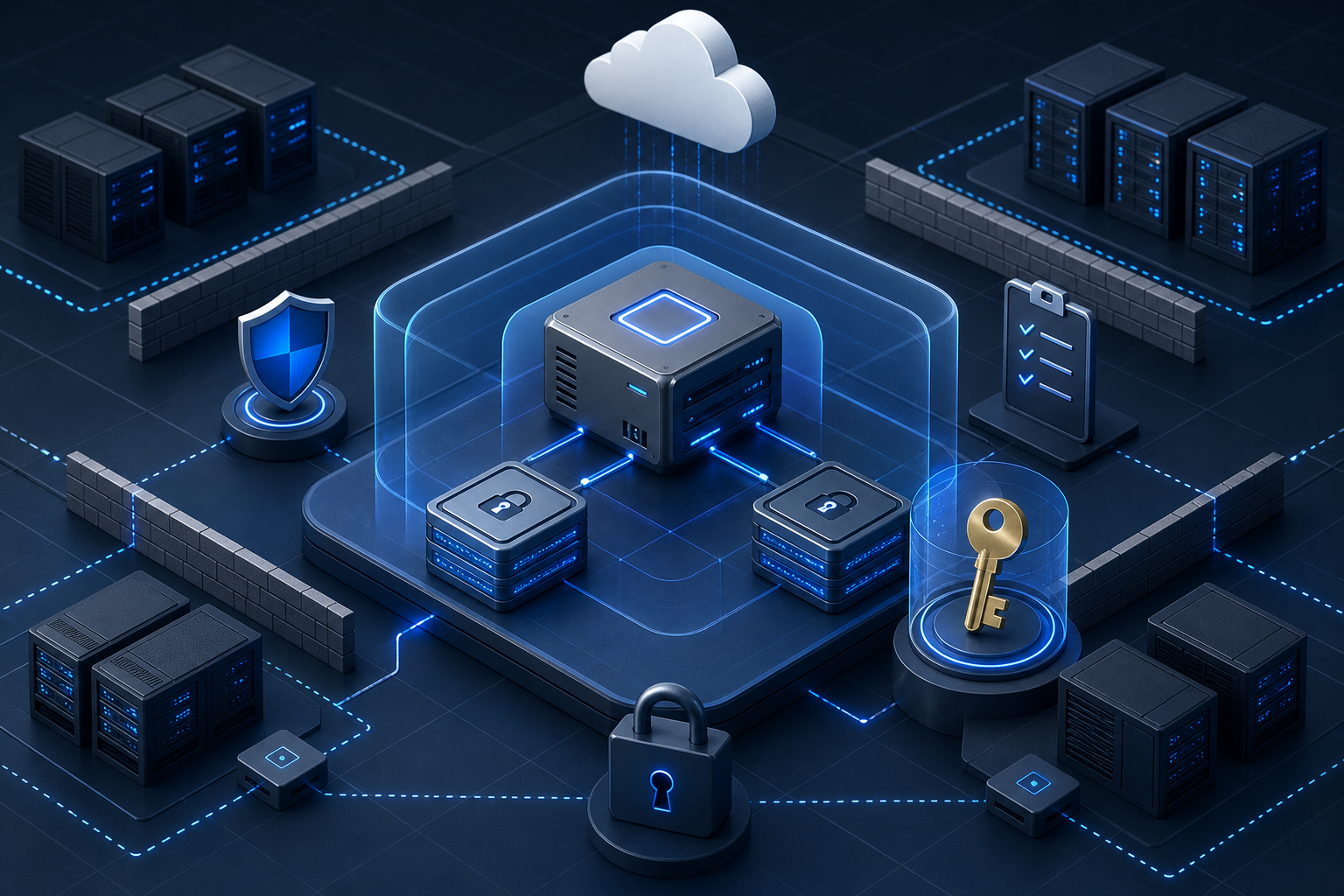
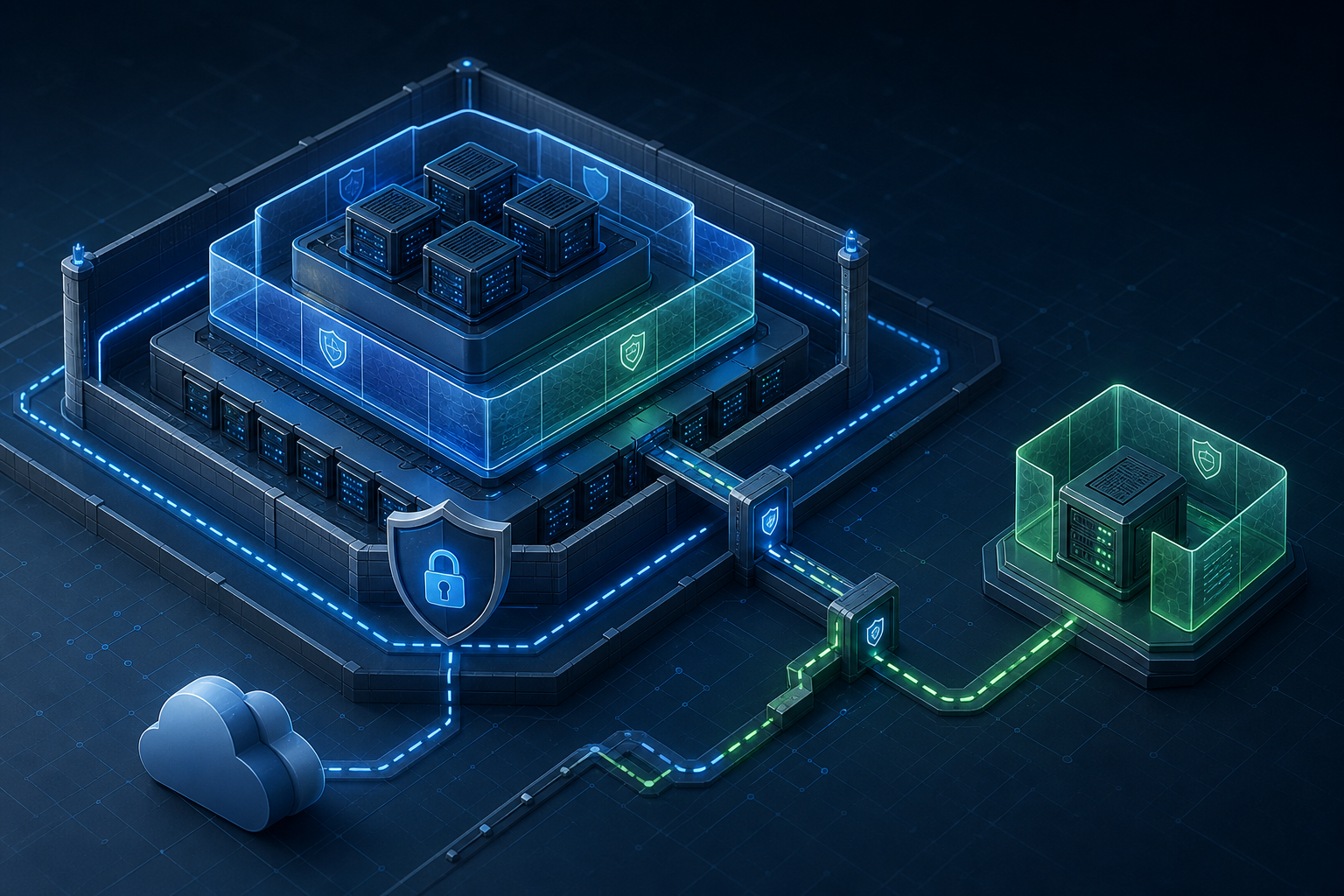
For teams running regulated systems, sensitive build environments, admin bastions, or tenant-isolated services, the best practice is to design isolation in layers rather than relying on one control such as a security group or a subnet boundary.
Why isolated workloads still need a security design
A workload is often called isolated when it has limited network exposure, dedicated compute, or separate trust boundaries. In practice, isolation can fail in subtle ways. An instance may have no public IP yet still reach sensitive services through an over-permissive route table. An admin role may be intended for one system but can be assumed from a broader automation path. A hardened guest may still be vulnerable if the control plane, metadata access, or logging paths are not constrained.
This matters operationally because isolated workloads are usually the systems with the least tolerance for compromise. They often hold secrets, process privileged data, or provide management access to other assets. If they are breached, the attacker gains a foothold inside the part of the environment you were trying hardest to protect.
If you are still assembling the network foundation for such environments, How to Set Up AWS Virtualization with Secure EC2 Networks is a useful companion reference for the networking layer that isolation depends on.
What strong isolation actually means in AWS virtualized environments
Strong isolation is not one feature. It is the combined effect of several controls working together:
- The workload is reachable only from explicitly approved sources.
- The instance role has only the permissions required for its function.
- The guest OS or image is minimized and maintained.
- Sensitive access paths are logged and monitored.
- Administrative changes are controlled and validated.
For AWS virtualized environments, this typically means tightly scoped security groups, non-routable or constrained network paths, minimal IAM permissions, encrypted storage and transport, restricted instance metadata access, and centralized logging for both infrastructure and guest events.
A common mistake is to treat the instance itself as the security boundary. In reality, the safer boundary is the entire path from identity to network to host to telemetry. A compromise at any layer can undermine the rest if that layer is too permissive.
How the layered model works
A practical security model for isolated workloads should answer four questions:
- Who can reach the workload?
- What can the workload reach?
- What can the workload do if it is compromised?
- How will you detect when assumptions are no longer true?
The first two questions are mostly about network and routing. The third is about IAM, filesystem permissions, guest hardening, and secret handling. The fourth is about logs, alerts, configuration drift checks, and periodic access review.
This is where many environments get stuck: they build isolation for day-one deployment, then fail to preserve it after a few image updates, role changes, or exception requests. Security best practices for isolated workloads are therefore as much about operational discipline as they are about technical configuration.
A compact workflow for securing an isolated workload
The workflow below is intentionally compact. It is not a full provisioning guide; it is a validation sequence you can use to judge whether the isolation model is actually defensible.
1. Define the trust boundary for the workload.
2. Restrict inbound access to named sources only.
3. Restrict outbound access to the minimum required destinations.
4. Attach an IAM role with the smallest practical permission set.
5. Harden the guest image and disable unnecessary services.
6. Limit metadata and secret exposure paths.
7. Centralize logs, alerts, and change review.
8. Re-validate after every image, network, or policy change.
The value of this workflow is not the order alone; it is the validation habit. If any later change weakens one control, the earlier assumptions must be rechecked.
Network controls: isolate by default, open by exception
For isolated workloads, inbound traffic should be defined by explicit source identity, not broad address ranges. Security groups should map to actual business paths such as a management subnet, a jump host, or a specific upstream service. If a rule cannot be tied to a real consumer, it is usually too broad.
Outbound traffic deserves equal attention. Many teams lock down inbound access and leave egress wide open, which allows an attacker to call out to external infrastructure, exfiltrate data, or pivot to adjacent services. If the workload only needs package repositories, monitoring, and a small set of internal APIs, outbound rules should reflect that exact requirement.
Network ACLs and route tables can add another layer of defense, but they should not be used as a substitute for precise security group design. In isolated environments, a clear rule ownership model matters more than piling on controls that nobody can confidently operate.
For EC2-based workloads, it is often useful to pair network isolation with instance-level access discipline as described in How to Secure AWS EC2 Instances with IAM Roles and Security Groups. That combination helps reduce both human-access risk and overexposure from permissive rules.
IAM and access paths: reduce the blast radius
Identity is often the fastest way to break isolation if it is not tightly scoped. The workload should use an instance role or equivalent temporary credential mechanism rather than static long-lived keys. Human access should be limited to break-glass or administration workflows with strong approval and logging.
A useful decision rule is this: if a permission is not required to boot, operate, patch, log, or recover the workload, it probably does not belong on the attached role. Access to secrets should be specific as well. Broad permission to read every secret in an account is a common pattern that makes isolated workloads much less isolated.
The practical question is not whether the role can perform its assigned task; it is whether the role can perform anything else if the system is compromised. Least privilege is a resilience control, not just an access control.
Guest hardening: treat the image as part of the boundary
Isolation fails when the guest OS is assumed to be trustworthy by default. A hardened image should remove unneeded packages and services, enforce secure remote access, patch on a consistent cadence, and lock down local privilege escalation paths as far as the workload permits.
For virtualized workloads, image consistency is especially important because drift tends to accumulate quietly. Manual fixes, temporary agents, or emergency debugging tools often remain in place long after the incident that introduced them. If you build isolated systems, you should also build an image lifecycle that can recreate them cleanly and verify the baseline after update.
Container-based components follow the same principle. If a virtualized workload runs containers or sidecar tooling, the host can be secure while the runtime remains overly permissive. In those cases, container-specific hygiene such as minimizing capabilities, limiting writable paths, and using approved images is still required. A focused reference is Docker Container Hardening: Best Practices for Secure Images.
Metadata, secrets, and temporary credentials
The instance metadata service is a high-value path because it can expose credentials to any process that can reach it from inside the workload. Restricted metadata access is especially important when multiple applications, agents, or scripts share the same host.
Best practice is to verify that only trusted workload processes can retrieve metadata and that the workload does not rely on static secrets embedded in user data, images, or configuration files. Short-lived credentials should be preferred wherever possible. Secrets should be injected through approved mechanisms and rotated according to their actual exposure risk, not an arbitrary calendar.
If a workload uses automation, make sure the automation path itself is not broader than the application path. A deployment role that can alter security settings, update IAM policy, or fetch unrelated secrets defeats the purpose of isolated deployment.
Logging, monitoring, and evidence of control
An isolated workload that cannot be observed is hard to defend. At minimum, you should be able to see who changed the network rules, who modified the role, when the instance launched, whether the guest was patched, and whether the workload is communicating outside its expected envelope.
The operational trick is to make logs actionable. Central logging is necessary, but so is a detection model for suspicious behavior such as unexpected outbound destinations, repeated access denied events, metadata access anomalies, or unauthorized changes to security groups and instance profiles.
Evidence matters as much as configuration. If you cannot produce a current snapshot of effective rules, role permissions, and alert coverage, then your isolation posture is partly assumed rather than verified.
What this means in practice
In practice, AWS virtualization security for isolated workloads means accepting that isolation is a moving target. The workload may begin with a clean design, but the true security posture depends on whether the environment still matches that design after operational changes.
A production-grade posture usually has these characteristics:
- The workload has a clearly documented trust boundary.
- Inbound and outbound network exposure are both intentionally narrow.
- The instance role is small, specific, and reviewed.
- The guest image is reproducible and hardened.
- Logging covers both infrastructure and host-level events.
- Exceptions are tracked and time-limited.
If one of those characteristics is missing, isolation may still exist, but it is weaker and more difficult to defend during an incident review or audit.
Practical scenario: a sensitive internal analytics node
Consider an internal analytics node that processes restricted financial data for a small platform team. It sits in a private subnet, has no public IP, and is accessed only through a management path. On paper, it appears isolated.
The risk appears when you examine the full path. The instance role can read several secrets it does not use. Outbound rules allow all internet access because package updates were needed during initial build. A temporary admin tool was installed during debugging and never removed. Logs are sent to a central system, but no one watches for changes to the security group or role attachment.
This is a recognizable pattern because it starts with a legitimate operational need and ends with a broad, informal trust model. The fix is not “more isolation” in the abstract. The fix is to narrow the identity scope, bound egress to known destinations, harden the image, and validate drift continuously. That is what turns a private instance into a defensible isolated workload.
Implementation trade-offs you should expect
Tighter isolation almost always increases operational friction. Narrow egress rules can break patching until the required repositories or mirrors are enumerated. Strict IAM scoping can slow automation until the workflow is mapped accurately. Hardening the guest image can complicate troubleshooting when teams are used to installing ad hoc tools.
These are acceptable trade-offs when the workload is sensitive enough to justify them, but they should be explicit. The usual mistake is to keep broad access “temporarily” and let it become permanent. A better approach is to define exception handling, expiration, and review dates up front.
There is also a performance and management trade-off in increased telemetry. More logging and more checks create more signal, but they also require storage, retention planning, and response ownership. Isolation without observability is fragile; observability without ownership is just noise.
Decision guidance: when this approach is appropriate
Use a layered isolation model when the workload has at least one of these traits:
- It processes sensitive or regulated data.
- It provides administrative or privileged access.
- It runs shared automation with high blast-radius potential.
- It is a target for lateral movement from lower-trust systems.
- It must be auditable for access and change control.
A simpler posture may be acceptable for short-lived development systems, low-risk batch jobs, or workloads that already sit behind a stronger service control plane. Even then, the workload should still avoid static credentials, overly broad inbound rules, and unmanaged guest drift.
If your team cannot validate the trust boundary, the role scope, and the logging path, the workload is not yet ready to be treated as isolated in an operational sense.
Common mistakes that weaken isolated workloads
The most common failure is assuming that no public IP equals secure. Private networking helps, but it does not prevent privilege misuse, internal lateral movement, or unintended outbound access.
Another common mistake is overtrusting the instance role. Temporary credentials are safer than static keys, but they are still powerful if the attached permissions are broad.
Teams also frequently forget to validate egress. If a workload can reach anything on the internet, it can often reach things it should not, even if inbound access is tightly controlled.
A fourth mistake is leaving exception paths undocumented. A one-time debugging rule, temporary admin password, or emergency firewall opening may be harmless for a day and dangerous for months.
Finally, some environments rely on hardening without verification. A hardened image is useful only if you can prove the deployed instance still matches the baseline after launch, patching, and operational changes.
Production readiness checklist
Before treating an isolated AWS virtualized workload as production-ready, verify the following:
- The workload boundary is documented and owned.
- Inbound access is limited to approved sources only.
- Egress is limited to required destinations and services.
- The instance role follows least privilege and uses temporary credentials.
- Static secrets are not embedded in the image or configuration.
- The guest image is hardened, patched, and reproducible.
- Metadata access is restricted to trusted processes.
- Logs cover network, identity, and host changes.
- Alerts exist for unauthorized rule changes or unexpected outbound behavior.
- Exceptions are time-bound, reviewed, and removed when no longer needed.
If any item cannot be verified, treat it as a production risk rather than a documentation gap.
Final takeaway
The safest way to protect isolated workloads in AWS virtualized environments is to treat isolation as a multi-layer control system, not a subnet setting. Narrow the network, constrain identity, harden the host, control secrets, and verify the result continuously. When those layers stay aligned, isolation becomes a real operational boundary instead of an assumption.
Use this guidance together with Hyper-V VLAN configuration and harden ML model APIs against adversarial attacks to connect the workflow with related operational context already available on the site.