Why does exception handling matter for secure coding in .NET?
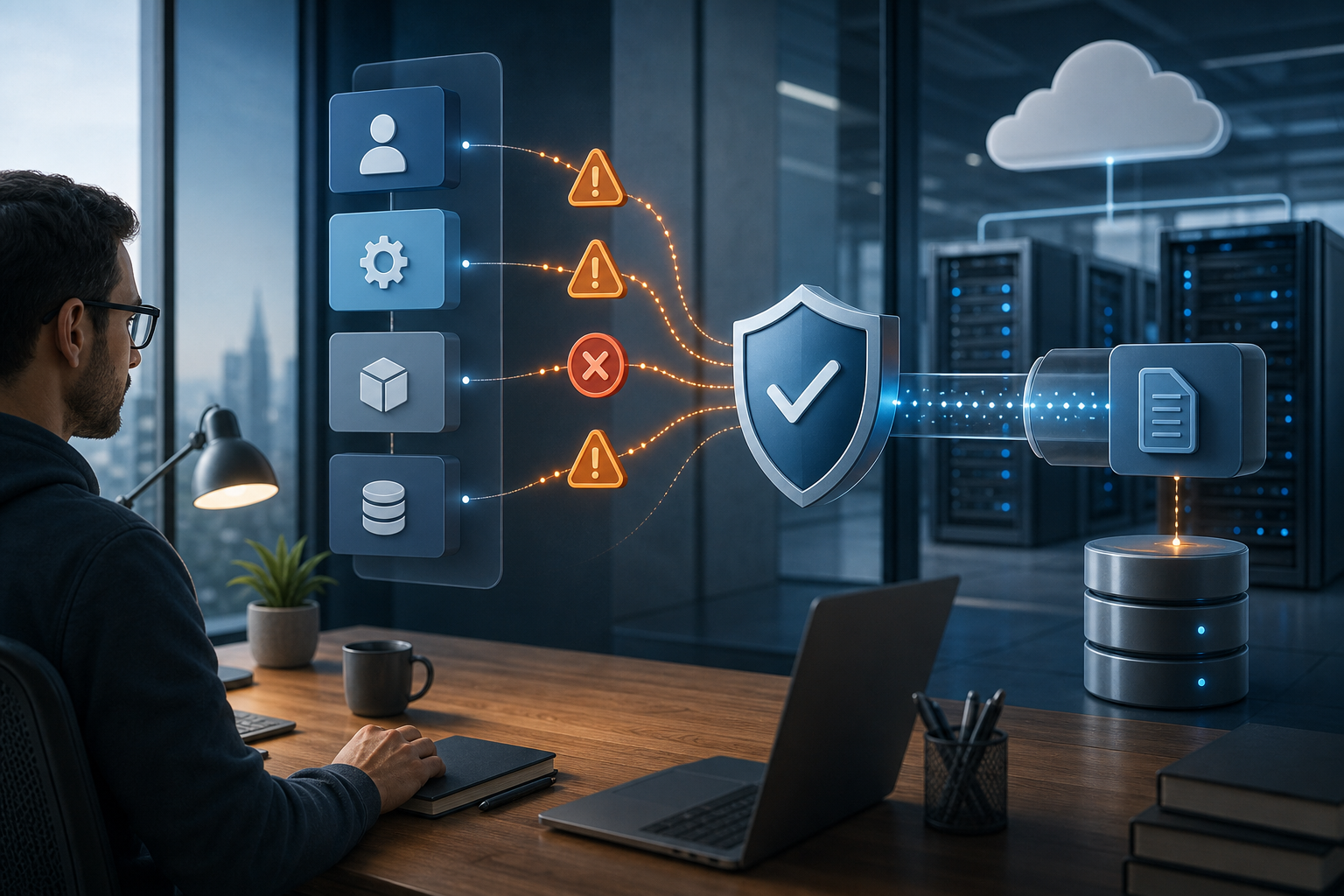
Exception handling matters because the wrong pattern can leak sensitive data, hide faults, or create inconsistent security behavior. In production, a poorly handled exception often becomes either an information disclosure problem or an availability problem, and both are operational risks. The goal is to fail safely: capture enough detail for support, return only safe information to the caller, and keep the application in a predictable state.
A practical rule is to decide what each layer is responsible for before you write the catch block. UI, API, service, and data-access layers should not all handle exceptions the same way. For example, an API may translate an internal failure into a generic 500 response, while a background worker may retry transient failures and alert on repeated faults.
Should I catch all exceptions in .NET?
No, you should not catch all exceptions unless you are at a boundary where you can handle, translate, or safely log the failure. A blanket catch (Exception) inside business logic usually hides defects, makes debugging harder, and can let an application continue in a bad state. In secure coding terms, that can suppress validation failures or mask authorization problems.
A better approach is to catch only the exceptions you expect and can meaningfully process. For example, a file import routine may catch parsing exceptions for malformed records, but it should not swallow OutOfMemoryException or other fatal conditions. If you do catch a broad exception at a boundary, rethrow after logging or convert it into a controlled response.
try
{
    ProcessRequest();
}
catch (UnauthorizedAccessException)
{
    return Results.Forbid();
}
catch (FormatException ex)
{
    logger.LogWarning(ex, "Invalid request format");
    return Results.BadRequest("Invalid input.");
}
catch (Exception ex)
{
    logger.LogError(ex, "Unhandled request failure");
    return Results.StatusCode(500);
}
The validation point is simple: if you remove the catch block, can the process still fail safely and be diagnosed? If not, the catch block is probably doing too much.
What should I log when an exception occurs?
Log enough detail to diagnose the problem, but avoid logging secrets, tokens, passwords, raw session identifiers, or untrusted payloads that may contain sensitive data. Secure logging is about useful evidence, not maximum verbosity. Include the exception type, a stable correlation identifier, the operation name, and any non-sensitive contextual fields that help identify the failing workflow.
For example, in an authentication flow you might log the username hash, tenant identifier, and exception type, but not the password or the full request body. If the exception comes from user input, log the validation failure and the field name rather than the entire payload. When in doubt, redact first and add more context only if it helps operations without increasing exposure.
If you need a consistent output pattern for operational reporting or auditability, align exception logging with the same validation discipline used in a reporting template designed for consistent and auditable output. The decision rule is: if the log could be stored, searched, or exported outside the application team, treat it as a security-sensitive artifact.
Is it safe to show exception messages to users or API clients?
Usually no, not in raw form. Exception messages often contain internal paths, SQL details, stack traces, object names, or implementation clues that help attackers. For secure coding, the caller should receive a safe, stable message that explains the outcome without exposing internals.
A practical pattern is to map internal exceptions to public error responses. For example, a failed database connection should become a generic service error, while a validation exception should become a client error with field-level details that do not reveal internals. That distinction matters because validation errors are user-correctable, while internal failures are operational.
catch (ValidationException ex)
{
    return Results.ValidationProblem(new Dictionary<string, string[]>
    {
        ["input"] = new[] { ex.Message }
    });
}
catch (Exception ex)
{
    logger.LogError(ex, "Unexpected failure");
    return Results.Problem(title: "Unexpected error", statusCode: 500);
}
The caveat is that even validation messages should be reviewed for sensitive content. If a message reveals policy logic, system structure, or access rules, simplify it before returning it.
When should I rethrow an exception instead of handling it?
Rethrow an exception when the current layer cannot correct the condition or safely convert it into a valid business response. A layer should handle the exception only if it can add value, such as translating the error, releasing a resource, or attaching context. Otherwise, it should preserve the original failure and let a higher boundary decide the outcome.
In practice, this often means the data-access layer captures low-level details for logging but lets the service layer decide whether the request can continue. If you must rethrow, preserve the stack trace so the source of the fault remains visible. In C#, that means using throw; rather than throw ex; inside a catch block.
catch (Exception)
{
    logger.LogError("Repository call failed");
    throw;
}
A useful decision rule is this: if the catch block does not change the response, enrich the log, free a resource, or trigger a controlled fallback, it probably should not exist.
How should I handle exceptions in asynchronous .NET code?
Use the same security rules as synchronous code, but pay closer attention to task boundaries, cancellation, and fire-and-forget work. Exceptions from async methods are often observed only when the task is awaited, so unobserved failures can disappear during testing and reappear in production. That makes structured awaiting and explicit error handling essential.
For awaited operations, catch exceptions around the await call and keep the handling close to the operation that failed. For background work, use a supervised queue, hosted service, or worker pattern so exceptions are captured, logged, and monitored. Cancellation is not an error condition by itself, so treat OperationCanceledException separately when the operation was intentionally stopped.
try
{
    await SendSecureNotificationAsync(ct);
}
catch (OperationCanceledException)
{
    logger.LogInformation("Notification canceled");
}
catch (HttpRequestException ex)
{
    logger.LogWarning(ex, "External service request failed");
}
The validation point is whether every asynchronous path has an observer. If a task can fail without being awaited, queued, or monitored, you do not yet have a safe exception-handling design.
How do I avoid leaking sensitive data in stack traces and error pages?
Disable detailed error output for untrusted users and restrict full diagnostic traces to authorized operators. Stack traces are valuable during development, but in production they often reveal file paths, framework versions, method names, and internal dependencies. Secure coding means separating operator diagnostics from end-user responses.
For APIs, return a consistent error shape and keep stack traces in logs or tracing systems with access controls. For web applications, make sure verbose error pages are enabled only in development or isolated test environments. If an exception includes part of a request payload, sanitize it before writing it to logs or telemetry.
A practical check is to force a failure in a non-production environment and review what a client sees versus what operators see. If the client response includes a file path, stack trace, connection string fragment, or SQL statement, the handling is too verbose.
What is the safest way to handle exceptions around security checks?
Do not use exceptions to make authorization or authentication decisions unless the framework explicitly requires it for flow control. Security decisions should be deterministic and explicit, not hidden inside a broad catch block. If an exception occurs during a security check, treat it as a failed security operation unless you can prove it is a safe transient condition.
For example, if token validation fails because the signature is invalid, the correct response is denial, not retry. If a policy store is temporarily unavailable, you may choose fail-closed or fail-open behavior depending on the trust model, but that choice must be intentional and documented. In most secure systems, fail-closed is the default when the system cannot verify identity or authorization.
A practical example is access control around a protected resource: if directory lookup fails, do not assume access. Instead, log the failure, return denial, and alert if the dependency outage threatens availability. That makes the security posture predictable.
How can I test exception handling before production use?
Test exception paths the same way you test success paths: deliberately trigger failures, confirm the response, and verify the logs. Exception handling is often untested because normal flows are easier to automate, but secure coding depends on the system behaving correctly under failure. Your test should confirm that the application does not leak internals, does not suppress important failures, and does not leave partial state behind.
A useful validation workflow is to exercise each major boundary with one controlled failure:
- invalid input that should become a client error
- dependency timeout that should be logged and translated
- unauthorized access that should remain denied
- cancellation that should not be treated as an application fault
For production readiness, pair this with an operational review so exception paths, logs, and rollback behavior are checked together. If you already use an operational readiness checklist for .NET deployments, make exception handling one of the items you verify before release. The decision rule is that every public-facing failure path should have an expected response, an operator signal, and a rollback-safe outcome.
What is the practical rule for secure exception handling in .NET?
The safest rule is to catch only what you can handle, log only what is safe, and expose only what the caller needs. That principle keeps exception handling aligned with confidentiality, integrity, and availability instead of turning it into a debugging shortcut. It also reduces the chance that a developer will accidentally convert a security failure into a generic success path.
In day-to-day work, that means using narrow catches inside component code, broad catches only at boundaries, redacted logs for diagnostics, and safe error translation for users and clients. Before production, verify three things: the caller sees a controlled response, the operator sees enough evidence to investigate, and the system state remains consistent after the failure. If those three checks pass, your exception handling is probably safe enough to ship.
Use this guidance together with common .NET mistakes to connect the workflow with related operational context already available on the site.
Use this guidance together with Hadoop cluster hardening checklist and Spark shuffle failures to connect the workflow with related operational context already available on the site.
Part of the Programming: .NET Insights content cluster.