All published content from our knowledge base — guides, how-to’s, and articles.
Low-noise alert threshold design is the practice of turning raw telemetry into actionable, reliable notifications. This guide explains how to choose what to al…
Health snapshots capture point-in-time state across availability, performance, configuration, and security signals. Host scoring turns those signals into an op…
Multi-tenant operations platforms let IT teams run shared operational tooling across many customers, business units, or environments without duplicating infras…
Phishing remains the most common initial access vector because email is both ubiquitous and inherently trust-based. Effective defense requires more than a sing…
Security failures in real environments rarely come from a single missing tool; they come from assumptions. This article walks through common IT security miscon…
A well-run incident response tabletop exercise validates whether your people, process, and tooling can actually handle an incident under pressure. This guide w…
This guide explains how to implement monitoring strategies with Grafana that hold up in production: a clear telemetry model, actionable dashboards, and alertin…
An incident response team is most effective when roles, authority, and workflows are designed ahead of time and tested under realistic pressure. This guide exp…
Microsoft Defender for Endpoint is a platform for endpoint detection and response (EDR) and broader XDR workflows within Microsoft 365 Defender. This guide exp…
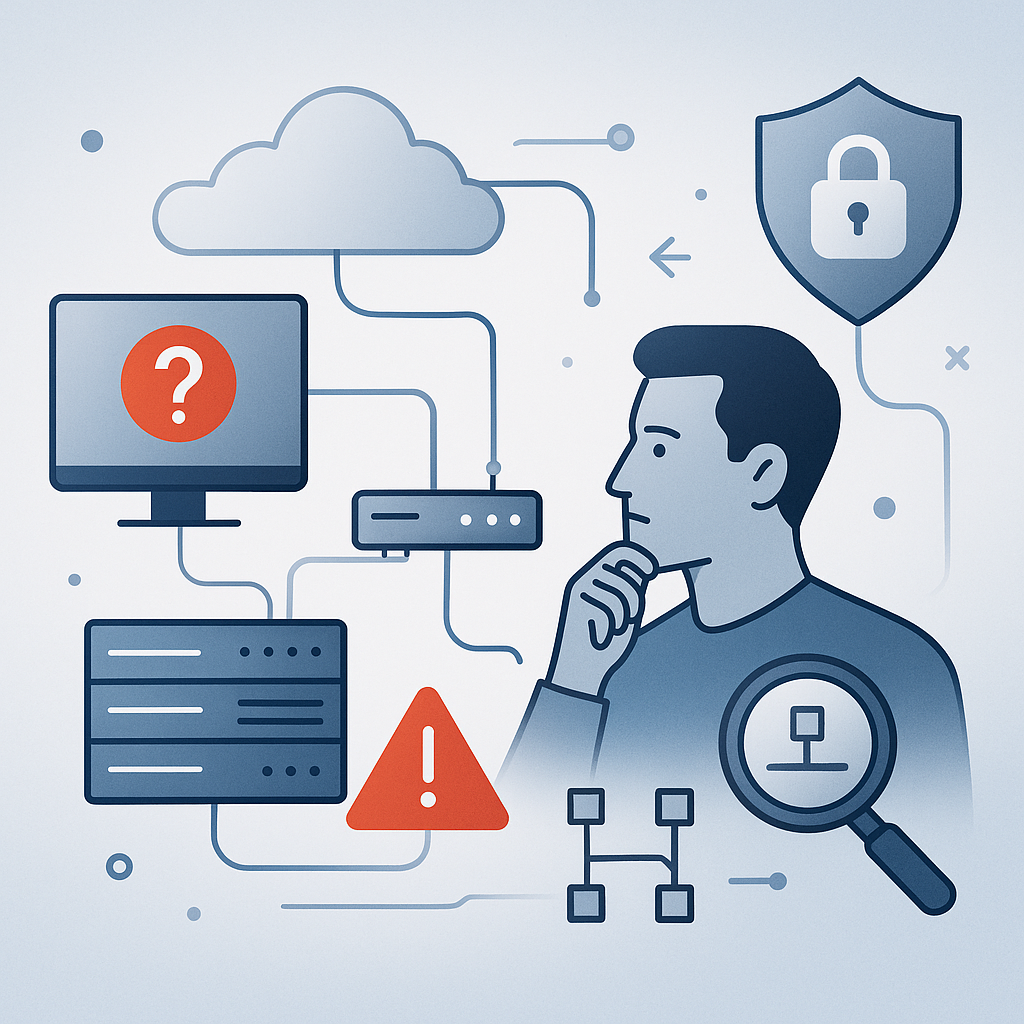
This guide explains a practical, repeatable approach to network troubleshooting for IT administrators and system engineers. It focuses on building a clear prob…
An incident response plan is only useful if it matches how your organization actually detects, triages, contains, and recovers from incidents. This guide expla…
Threat hunting is the discipline of proactively searching for adversary activity that has evaded preventive controls and existing detections. Done well, it tur…